Monday, March 30, 2015

Charting the Rich Musical History of Warwick University - Pete Clemons

It's been a while since we had a Pete Clemons post on here but pete is back in fine form looking at the musical history of Warwick University for the Coventry Telegraph.

Charting the Rich Musical History of Warwick University
Pete Clemons

Away from the city centre another area of Coventry with an incredibly rich pedigree in music, and the arts, is
the 700-acre campus now known as The University of Warwick .

The University of Warwick, or Warwick University as it is more locally known, was first given government approval in 1961 and received its royal charter when it first opened during 1965.

Also out in that corner of the city, and already existing on what is now known as Westwood Campus in Kirby Corner Road, was the City of Coventry Training College for Women which first opened on the site in 1948. This, in turn, had replaced the Men’s Emergency College and was set up in a former wartime workers hostel to address a shortage of teachers.

When it became a mixed establishment during 1958 the City of Coventry Training College for Women also changed its name to the Coventry College of Education and, for many years, was more popularly known as Canley Teacher Training College .
Canley College of Education, Coventry

Remarkably the principle of the teacher training college remained the same from when it opened and for almost its entire duration. And it was Miss Joan Browne who had fulfilled that role through to when she retired in July 1975.

After Miss Browne retired from the teaching college, which had been an entirely separate entity, it then became known as the Institute of Education and during 1978 was absorbed into Warwick University. The college, itself, was situated at what is now Arden House on the Westwood Campus .

The Coventry College of Education had its own campus and hall along with its own student union. A strong live music scene existed their during the late 1960s through to the mid 1970s and the venue attracted the likes of Status Quo, Stealers Wheel, Barclay James Harvest, Genesis, The Average White Band, Dando Shaft and Fairport Convention among many other visitors.

Genisis
U2

Warwick University also had, and continues to have, a strong students union. The campus has, for many years, staged an annual arts festival. And those festivals, particularly those held during March throughout most of the 1970s, were fairly high profile. A whole weekend was taken up by a host of live concerts of all kinds, workshops, plays and poetry recitals. During their lifetime these festivals attracted bands such as The Pink Fairies, Caravan, Gong, Al Stewart, Osibisa and Desmond Dekker.

Apart from the festivals the venue became an important stop-off on the college circuit, which in itself was an important rung on the ladder to get on, and witnessed the appearance of many bands making their way in the music business like Pink Floyd, Mott the Hoople and The Wailers who, of course, included Bob Marley.

Warwick University also had a strong folk club which was quite pivotal in the area during the 1970s. Visits were made by Bert Jansch, Harvey Andrews, Dick Gaughan and Jasper Carrott among many others.

But if the 1970s saw some major talent play Warwick University then it has to be said that the 1980s saw a real purple patch for the university as both the ever growing Arts Centre and the student union were both attracting some serious names.

In 1970, five years after it opened, the University of Warwick, commissioned the building of an arts centre.
The Smiths
The building, itself, comprised of a main theatre and a studio theatre. But it also housed a host of other facilities. The opening ceremony of the Arts Centre, during October 1974, was attended by the likes of actress Dame Peggy Ashcroft and composer Leonard Bernstein. Without doubt this building enhanced the university’s stature within the arts world.

The Smiths, Simply Red, REM, Steel Pulse, U2, Talk Talk along with a host of local bands such as The Pink Umbrellas, King and, of course, The Specials all performed at either the student union venue or at the Arts Centre. I barely scratch the surface here. The list is actually quite substantial and just absolutely staggering.

Over time, of course, the Arts Centre would grow and this development saw the 1,500 all-seated Butterworth Hall completed in January 1981 with the Mead gallery following on in 1986.

By the end of the 1980s, however, times had changed and despite visits by bands such as Radiohead and
Radio Head
The Cardiacs the early 1990s began to highlight an issue that needed to be addressed. The music being provided by the university entertainments team was seen as becoming outdated. A questionnaire was submitted to the then current crop of students and the responses clearly highlighted that a ‘limited range of acts was being asked to appear’.

Club culture was growing and an upsurge in more regular events was required to provide entertainment every night of the week. The student entertainments team responded positively by introducing a variety of sounds. All of a sudden indie, rock, jazz, funk, soul, house, pop, R’n’B, 70s and 80s nostalgia were all being showcased at the university. Despite this, the bands still appeared, but the regularity of them diminished.

The festivals were revived during 2002 by way of the Warwick Student Arts Festival (WSAF) with the aim of showcasing and celebrating all aspects of student art. It features a programme of events including plays, musicals, dance, film, orchestras, choirs and bands. All the events are normally free to attend.

Another revived club at the university is Warwick University Folk Society which was formed in 2001. They
Warwick University Arts festival in the 1970s'
describe themselves as ‘an eclectic group’ and ‘aim to cater from beginners to enthusiasts, with involvement in both the music, song and dance aspects of the Folk scene’.

The students union, at the university, continues to be incredibly vibrant. They do not appear to have as many bands nowadays, although the likes of The Wombats and The Wild Beasts have appeared there in recent years, but they have continued the tradition of keeping abreast of the times by providing a wide range of club nights at the recently refurbished Students Union halls, also known as The Copper Rooms.

During 2009 the Butterworth Hall had a major overhaul that resulted in improved acoustics, new seating and an enhanced stage and backstage spaces. The result is that the Warwick Arts Centre continues to flourish and is now the largest of its kind outside of London. Apart from the theatres the Arts Centre also comprises a cinema, a conference room, hospitality suites, a restaurant, cafe, shops, and two bars. The site also includes the university bookshop and a branch of an entertainment retailer. It continues to have a regular stream of major name artists.
............................................................................

Warwick University Arts Festivals 1970's See here on the Hobo - Coventry Discos and Venues etc 


Warwick University Arts Festival 1971


Thursday, January 15, 2015

The Primitives - Coventry band

First main Pete Clemons article for the Coventry Telegraph in 2015, this time remembering the 80's hit band The Primitives who reformed.


Do you remember Coventry band The Primitives?

Can anyone remember The Primitives?

The Coventry band that had hits such as ‘Stop Killing Me’ and ‘Out of Reach’. Not forgetting, of course,
their biggest hit, ‘Crash’, which saw chart success on both sides of the Atlantic and which also surfaced on the soundtrack of the film Dumb and Dumber.

In fact, during 2008, Mojo Magazine voted The Primitives’ second single ‘Really Stupid’ as one of the Top 40 UK indie singles of all time.

Well for those that do remember them, then you are more than likely to be aware that, after a period of well over 20 years, they returned with an album of fresh and new material.

The Primitives new album titled ‘Spin-O-Rama’ was released on October 13, 2014 on the band’s own Elefant Records label and does not appear to have lost any of the chemistry that once made them so very popular.

The Primitives formed during 1985 and created catchy and jangly songs that seemed to be influenced by 1960s pop and psychedelia. They were initially classed as an ‘indie’ group and released their songs on their own label which was called Lazy. In fact one of their early songs was actually titled ‘Lazy’.

The band then went on to sign up for RCA records. This was around about 1987/88. While at RCA they released more original material but also re-recorded some of their earlier Lazy label songs.

These re-recordings were for their first RCA album ‘Lovely’, released in 1988. Two more albums were released on RCA, titled ‘Pure’ and ‘Galore’, before the group disbanding in the early 1990s before finally calling it a day in 1992.

The Primitives actually got back together during 2009 and, by October of the same year, they had played their first reformed gigs. These were fairly low key affairs and were held at The Herbert in Coventry and the Buffalo Bar in London.

But since then The Primitives have been gigging more regularly at home and abroad. You may remember that they appeared at the Leamington Assembly during April 2010. And when they began to record together again The Primitives even enlisted the services of original producer and one time bass player Paul Samson who, of course, should need no explanation as to his role within Coventry music history.


Apart from new bassist Raphael Moore the rest of the band should, also, not require any introductions. Although Raphael is new to The Primitives he is very much local to the city and was once a member of acclaimed Coventry band The Furious Apples.

Steve Dullaghan
But for those who are new to the band they consist of original members from the classic period, and who made four appearances on Top of the Pops, namely Tracy Cattell aka Tracy Tracy on vocals, principal song writer Paul Court on guitars and vocals and Richard ‘Tig’ Williams on the drums.

It was actually tragic circumstances in February 2009 that got Paul, Tracy and Tig to get back in contact
with each other again and which ultimately led to the band’s reformation. This of course was the untimely death of the band’s founding member and bass player Steve Dullaghan. (Hobo magazine did a tribute to Steve here http://coventrymusichistory.typepad.com/blog/2009/02/the-primitives-coventry-band-tribute-to-steve-dullaghan.html


The Hobo Article on Steve


An EP release during March 2011, which featured two original songs alongside two cover versions, became the first real fruits of recorded music from the reformed band.

And then, during 2012, an album titled ‘Echoes and Rhymes’ appeared. It was essentially a covers album and contained fourteen relatively obscure tracks. But what an album it turned out to be. The songs covered, which included hidden gems like ‘Panic’ by Reparata and the Delrons, Sandy Posey’s ‘Single Girl’ and Nico’s ‘I’m Not Sayin’, were certainly given a whole new lease of life. I assume that the tracks involved were pulled together by Paul Court as I understand that he is a serious collector of rare and hard to find 45rpm vinyl records.

During the band's hiatus Tracy never went down the route of a solo artist. However, she contributed vocals to Band of Holy Joy among others, and also recorded with several outfits that worked in the dance music field. Tracy’s voice can also be heard on the short-lived, post-Primitives band Starpower’s cover of Nancy and Lees’s ‘Some Velvet Morning’.

In the meantime Paul Court continued to work with band member Tig, fronting post Primitives bands such as Starpower and Hedy. After a couple of singles were released Paul decided to give up music and moved into art and design. He sold his original artwork via his website Joypop Studio. Paul also began, and continues to, do DJ guest spots at London indie clubs.

After the various post-Primitives bands and projects, in which he was involved, had come to an end, Tig opened a shop called Pea Soup in Leamington Spa, selling hand crafted gifts and homeware items. He later went on to become a graphic designer.

Spin-O-Rama, if you read the reviews, does not appear to disappoint. And the band apparently had a great time putting it together. In fact most of the reviews I have read have shown the band in a positive light. Some go as far as mentioning the album to be one of the better ones that they have heard during 2014.

The title track, which kicks off the album, was released earlier in the year as a 7-inch single. This instantly sold out on pre-orders alone.

If you feel in anyway sceptical about The Primitives’ reunion then let me try to reassure you. The band has lost none of their original sound as such. What they have done here is to recreate the same formula but at the same time inject more experience and maturity in their sound.
This is the link to original Coventry Telegraph Article article http://www.coventrytelegraph.net/whats-on/music-nightlife-news/you-remember-coventry-band-primitives-8444204


From the 1st reunion at the Coventry Music Exhibition Herbert Art Gallery and Museum 2009


More here https://www.youtube.com/user/bgbgbgx/videos


Wednesday, January 14, 2015

Coventry Music Stars 2014


Coventry music stars that made 2014 a year to remember
Article by Pete Clemons for the Coventry Telegraph.


Rog and Pip
City music historian Pete Clemons takes a look back at some of the gigs and new releases that made last year memorable for him.

I have had another great year when it comes to record buying and gig going. As far as new albums the recent releases by Pink Floyd, Anathema, Syd Arthur, My Brother the Wind, Lunatic Soul, Gazpacho, Tim Bowness and The Pineapple Thief  have been particular favourites during the course of 2014.

On the gig front I also got to see several bands from the above list play live but also groups and artists whose roots date back to the 1960s like The Manfreds, The Fortunes and Chris Farlowe.

But the gig that seemed to get me the most outside of Coventry was the one by Status Quo at Wolverhampton Civic Hall during April. What was special about this gig is that it featured the Quo’s classic line up. And what made it so special was the atmosphere. With a set list which was structured around the bands 1977 live album it really was like going back in time and, well ...you just had to be there.

But I think what 2014 has reinforced with me is just how fortunate Coventry and its surrounding area is to have so much impressive, yet varied, talent right here on our doorstep.

Locally we were treated to three quite wonderful album releases which all sit at very different points of the musical spectrum.

March saw the release of The Game by singer/songwriter Kristy Gallacher while early December heralded the long awaited album debut by one of the more heavier of Coventry’s bands The Resurrection Men. Sandwiched in between them saw the arrival of  Si Hayden’s interpretation of Vivaldi’s The Four Seasons on acoustic guitar.

Maybe your own personal music taste may well pull you in the direction of one of the above musical genres. You may well be tempted to buy. If that is the case then just do it. Trust me, none of these albums releases will disappoint. And at the same time you will be supporting these guys with vital funding.

The Sorrows in 2014

And then there was the rather fine release by Rog and Pip titled Our Revolution – not strictly new music but what this compilation did do was gather together, for the first time, all the singles released by the pair from the late 1960s through to the mid 1970s.

In addition to the albums we had a succession of single and EP releases that included some quite wonderful offerings from The Sorrows, The Moonbears, Callum Pickard and the Third Look and Barb’d Wire. Again, and as with the albums, these are all top notch releases.

I can only repeat myself here but Coventry and Warwickshire is incredibly lucky. By the way, these are not exhaustive lists. There are quite likely to have been other releases that I missed. For those who fall into that category you have my apologies in advance.

Once again I was treated to an awful lot of gigs in our area. The Mosquitoes, Blues 2 Go and Roddy Radiation and his Skabilly Rebels were without doubt amongst the highlights. But the one gig that really stuck in my mind was that by Joe O’Donnell and his band Shkayla at Warwick Arts Centre. Maybe because I went with no prior expectations but that one, for me, really was a bit special.

The new year is already shaping up to be memorable. Having been lucky enough to have heard a demo of an album release by a local artist I can safely say now that it will be one I will be raving over.

*** Original article in the Coventry telegraph here http://www.coventrytelegraph.net/whats-on/music-nightlife-news/coventry-music-stars-made-2014-8411572

Si Hayden


Monday, November 24, 2014

The Enduring Privacy of Pink Floyd - Pete Clemons

The latest article by Pete Clemons for the Coventry Telegraph features Pink Floyd. not such a strong Coventry angle this time but interesting all the same.


The enduring privacy of Pink Floyd
by Pete Clemons for the Coventry Telegraph

Despite recording the most pre-ordered album in Amazon's history, rock group have always been reluctant rock stars.

To mark the release of Pink Floyd's new album, music writer Pete Clemons remembers when he bought the band members' solo albums and explains how they retained their privacy despite their fame...

It is a Saturday morning during September 1978 and I still remember hurrying into town to pick up an LP I had ordered from Virgin records in the arcade. The record I had bought that day was titled ‘Wet Dream’ and had been released by Richard Wright.

A similar thing had happened earlier in the year when I went to pick up the first solo release by Pink Floyd guitarist and fellow band mate David Gilmour.

I think at the time I expected to hear, within those two albums, extensions of the Pink Floyd sound. But solo albums were a different concept altogether and I had not really grasped that notion back then.

I suppose that this had been an opportunity to cut loose from the band and flex their individual talents in slightly different directions. David Gilmour’s album was more blues based whereas Richard Wright’s was a more laid back, easy going affair.

As it happened though, I was far from disappointed in those records. Both contain some brilliant songs and some very fine moments are to be found within them.
Pink Floyd in the early days

Wet Dream had been the first solo album by the late Pink Floyd keyboardist Richard Wright and both this release and that of Gilmour’s slipped out very quietly and almost unnoticed at the time.

This, I am guessing, was down to the fact that, up until then, Pink Floyd had been a fairly private band. The individual band member’s names were only really known to those really keen fans who actively sought this kind of information out.

Check out the covers, or gatefold sleeves, on some of their early albums. At times these covers did not feature the band’s name. And the majority of the sleeves did not even contain any images of the group.

During the 1970s when the band was arguably at their peak interviews with them were, apparently, incredibly awkward affairs. This was particularly so when the questions veered away from the band’s current project or what the band was attempting to create musically. I personally, don’t think Pink Floyd were trying to be pretentious or anything like that. I just think it was a case of them wanting to keep their individual personalities out of their collective publicity.

In fact during an interview conducted in 1978 David Gilmour touched on this infamy: “This album was important to me in terms of self-respect. At first I didn't think my name was big enough to carry it. Being in a group for so long can be a bit claustrophobic, and I needed to step out from behind Pink Floyd’s shadow.”

And this privacy has, by and large, remained throughout the band’s existence. When Richard Wright passed away at the age of 65, during September 2008, the sparsest of information surrounding the incident was made available to the public.

In true Pink Floyd tradition and completely out of the blue a tweet appeared on July 5, 2014. It had been released by Polly Samson, the partner of David Gilmour, and simply mentioned that ‘Btw Pink Floyd album out in October is called ‘The Endless River’. Based on 1994 sessions is Rick Wright’s swansong and very beautiful.’

A day or so after that tweet the following statement appeared on Pink Floyd’s website: ‘Pink Floyd can confirm that they are releasing a new album The Endless River in October 2014. It is an album of mainly ambient and instrumental music based on the 1993/4 Division Bell sessions which feature David Gilmour, Nick Mason and Richard Wright. The album is produced by David Gilmour with Phil Manzanera, Youth and recording engineer Andy Jackson. Work is still in progress, but more details to come at the end of the summer.’ Of course, the album’s actual release date was set for November 10.

Durga McBroom, who is one of Pink Floyd’s long time backing vocalist and a touring member, went on to
reveal: “The recording did start during The Division Bell sessions which is why there are Richard Wright tracks on it. But David and Nick Mason (Pink Floyd’s drummer) have gone in and done a lot more since then. It was originally to be a completely instrumental recording, but I came in last December and sang on a few tracks. David then expanded on my backing vocals and has done a lead on at least one of them.”

The cover art, created by Ahmed Emad Eldin, is a vision of a man punting across an ocean of clouds and onwards towards a sunset. I do think that it has brilliantly captured the essence of what the album is about.

The Endless River will be Pink Floyd’s 15th and, apparently, final album. David Gilmour was very recently quoted on BBC Radio 6 as saying, “It’s a shame, but this is the end. The Endless River is a continuous flow of music that builds gradually over four separate pieces over the 55 odd minutes. There’s a sort of continuum from the Division Bell album to this, and the last phrase but one on The Division Bell is ‘the endless river’: the endless river forever and ever, at the end of the song High Hopes. The only concept is the concept of me, Rick and Nick and I, playing together in a way that we had done way way back in the past but had forgotten that we did, and was instantly familiar.”

Nick Mason continued, “I think Rick would be thrilled actually. I think this record is rather a good way of recognising a lot of what he does. I think the most significant element was really actually hearing what Rick did, because, having lost Rick, it was that thing of... it really brought home what a special player he was.”

Pink Floyd played gigs in the Coventry area several times, in particular, during their early years. In addition to the package tour of 1967 that stopped off at Coventry Theatre and also featured Jimi Hendrix they also played venues like Warwick University and the Locarno ballroom.

These venues, along with the Lanchester Polytechnic, were revisited by the band during 1969. And then of course they returned to the Locarno during 1972 where they performed an early version of what would become ‘Dark Side of the Moon’.

During their time together it is estimated that Pink Floyd sold more than 250 million records worldwide. And that is before this latest release. During July 2005 the ‘classic’ line-up reformed for the Live 8 event at Hyde Park. Given the events that followed it was a rather timely reformation.

And it appears that the appetite for Pink Floyd music still exists. Apparently ‘The Endless River’ was the most pre-ordered album on Amazon of 2014. But as the saying goes, all good things come to an end sometime.


Monday, November 10, 2014

King - The Rise and Fall of this Coventry Band

Pete Clemons now has his articles published automatically on line as well as in the physical version of Coventry Telegraph. Pete still wants the collection of his articles kept together but we can now do it differently - the text will digital with a graphic of the physical page but with the usual addition of supportive material from the Hobo websites.

This time Pete focuses on Coventry band  King.


The rise and fall of Coventry band King
by Pete Clemons  from Coventry Telegraph
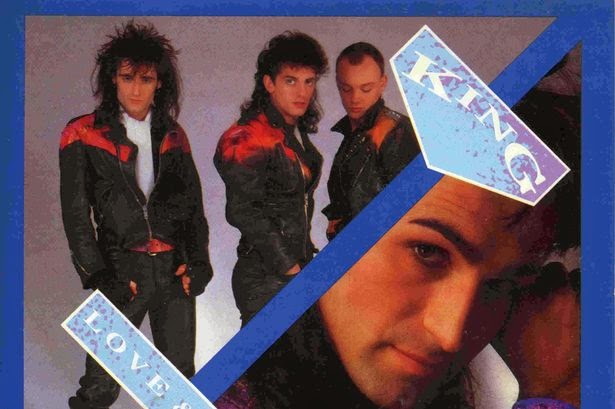
King's album, Steps In Time


Music writer Pete Clemons profiles the history of Coventry band King...the article is from Coventry Telegraph - here  http://www.coventrytelegraph.net/whats-on/music-nightlife-news/rise-fall-coventry-band-king-7979279

With 1980s music being back in vogue recently it is worth remembering Coventry band King who were active between 1982 and 1986.

During their time together King certainly hit the heights as, at their peak, the band had a succession of hit singles and recorded two highly rated albums for CBS Records. However, it was how the band developed as a unit that I always found fascinating. Despite their eventual success it was not the smoothest of journeys.

The early 1980s were heady days for the Coventry music scene. There was an incredible amount of talent in
King's single, Soul On My Boots
the city and an abundance of bands sprang up during this period. One of them, The Reluctant Stereotypes, appeared on iconic TV programme The Old Grey Whistle Test, and had caught the eye of fashion designer Perry Haines.

Perry was also a stylist and magazine editor. In the past he had worked on videos with bands such as Duran Duran, Spandau Ballet and Visage. And now he wanted to add band management to his portfolio. Perry had been impressed by The Reluctant Stereotypes and in particular their flamboyant vocalist  Paul King . Sometime later Perry contacted Paul and invited him down to London for some modelling work. Perry also expressed a desire to manage Paul’s band. But by then The Stereotypes had disbanded. So Paul set about building a new group.

This led to the creation of Raw Screens who consisted of Paul on vocals along with fellow Stereotypes, Tony Wall on bass and drummer Colin Heanes. Completing the group were guitarist Jim Lantsbery, Lynn Thompson on trumpet and Mick Roberts on keyboards.

By early 1982  Raw Screens had taken over a floor of The General Wolfe pub on the Foleshill Road. The support of landlord, Ken Brown, toward local musicians was incredible. By the summer of 1982 Raw Screens had lost Lynn Thompson and changed their name to King. (Lynn Thompson is, nowadays, a member of the rather excellent Stone Foundation).

1983 began extremely well for King and they had an excellent week during January when they had a track
King's single, Love and Pride
played on Peter Powell’s Radio 1 show each evening for a week. They were also featured on BBC2’s Oxford Road Show on January 21 and the following night played a gig at the General Wolfe.

But there was disquiet in the camp and during Feb 1983 the band lost drummer Colin Heanes. In Colin’s own words he was ‘sacked for many reasons but mainly because he spoke his mind’. Colin was replaced by John Hewitt who had previously been with another local band Team 23.


1983 was a very busy year for King as they began the job of establishing themselves. They were given saw support slots for tours headlined by Wah!, Everything But The Girl and Jo Boxers. And towards the end of 1983 the band secured a recording deal with CBS records.

King quickly attracted a large following that included a number of skinheads. This was bound to happen, I guess, because of the way the band dressed in their Dr Martens boots which would go on to become their trademark attire. However vocalist Paul King was quick to play down the issue by emphasising the fact that the boots were not a symbol of aggression. The band was trying to turn all that on its head by painting the boots different colours and turning them into an enjoyment thing.

Part of a promotional pack put together by Perry Haines proclaimed ‘whereas Coventry was two tone,
Perry Haines
King now paint the town multi tone, embracing all the colours of the rainbow
’. To distance the band from what had been King was being promoted as multi tone as opposed to a 2-Tone band.

March 1984 found King and Richard Burgess, of electronic band Landscape, in various studios. Over a three day period the group recorded ‘Love and Pride’ along with two B-side tracks but the recording session didn’t run smoothly. It seems that there were drumming issues.

The long awaited debut single was released during April 1984. King was really pleased with ‘ Love and Pride ’ with Paul King saying at the time ‘it is the best we could have done. It has a lot of potential but whether it is going to be a hit depends on whether the people at Radio 1 play it’.

The following month, May 1984, King announced the departure of drummer John Hewitt due to musical differences. However, John himself disclosed a deeper reason for his departure and revealed a series of what he felt were snubs. Even though he played drums on Love and Pride John had his picture erased from the single’s picture sleeve.

John also claimed that the rest of the band were allowed to buy new leather jackets for the photo shoot while he had to make do with a pair of oversized dungarees. And that he was not allowed to join the video shoot to promote the single.

With the LP recorded Paul King defended the band and claimed that King were changing their style and that it was John who was not happy playing in that style and it was he who did not want to stay as a member of the band.

During the album’s recording it was reported that the band had used an American drummer called ‘X’ who
King's album, Bitter Sweet
had agreed to play on the LP but did not want to join the band permanently. It is also reported that Richard Burgess also played drums on the album.

King then enlisted the services of  former drummer with The Members, Adrian Lillywhite, who joined the band in order to fulfil a tour that had been set up to promote the album. Over the next two years Adrian would tour and record with King but would never feature as a member of the band in any promotional photo or videos.

The band’s second single ‘Soul on my Boots’ was released during the summer of 1984 and was heralded in by way of a new design of Doc Marten boot. The band were delighted to each receive a pair of the 20-hole boots which made their debut at a gig at the Dominion Theatre in London.

On September 10 1984 King provided the pre-match entertainment at a testimonial for Coventry City’s then skipper and stalwart Brian Roberts. The band played a 45-minute set precariously perched on the back of a lorry parked in the centre circle at Highfield Road. The set included a reworking of the Match of the Day theme tune.

During October 1984 King played a gig at the Lanchester Polytechnic. By now the band were getting a youthful  following. Paul King said at the time ‘so many young teenagers want to go and see bands but they are stopped from getting into the venues by the licensing laws’. So the band duly obliged by putting on a 3pm matinee and fixed the entrance fee to just 50p.

Those early singles had not had an impact on the charts. It was only after King made an appearance on the iconic TV programme ‘The Tube’ and toured with Culture Club toward the end of 1984 that the wider public begin to take notice of them. This resulted in a demand to have those singles rereleased.

January 1985 finally saw King take off and break onto the charts. A headline tour that included a gig at Coventry Theatre followed. The year continued with an appearance at Glastonbury, a successful tour of the America, the release of their second album ‘Bitter Sweet’, and ended with an infamous gig at the Glasgow Barrowland’s on New Year’s Eve which was filmed for an Old Grey Whistle Test special.

All had not been well though and cracks in the band had begun to show during 1985. King toured Japan during 1986 and there was even talk of a third album. But despite the band’s now worldwide’ popularity, a Paul King solo album was preferred by the record label. This effectively finished the band.

After the split Paul King, famously, went to work for the media where he became one of the faces of the MTV boom. Now living in his native Ireland Paul is still involved with the media. A compilation CD that pulls together all of King’s music, that includes Paul’s solo work, was released. And even today their hits can be heard on the radio. Particularly those that favour 1980s dance music.

..............................................................................
The article as it looks in the physical copy of Coventry Telegraph


Reluctant Stereotypes


Singles
"Love & Pride" / Don't Stop (1984) UK #84
"Love & Pride" (re-release) (1985) US #55 UK #2
"Won't You Hold My Hand Now" (1985) UK #24
"Alone Without You" (1985) UK #8
"The Taste Of Your Tears" (1985) UK #11
"Torture" (1986) UK #23
"I Know" (1987) - Paul King solo UK #59
"Follow My Heart" (1987) - Paul King solo Failed to chartAlbums
Steps in Time (1984) - King
Bitter Sweet (1985) - King
Joy (1987) - Paul King


"Managed by Perry Haines, King had many hit singles, and were famous for their hideous mullet hairstyles, along with painted bovver boots. There was a lot of scoffing when this band started, but they worked bloody hard to get where they did, so well done to them. Once they hit, I remember not being able to walk around Coventry without seeing THAT haircut! They were working on a third album with Dan "instant replay" producing by split. Paul King made an Album "joy" produced by Hartman and appeared on the Ferry Aid single Let It Be, produced by our old friend Pete Waterman. He has been for many years a VJ on MTV, and very good at it he is too. Maybe all those years doing medieval banquets at Coombe Abbey paid off!"

The Raw Screens
From Pete Chambers
"Created from the remains of the ever-so-good Reluctant Stereotypes, The Raw Screens honed and perfected their act and then switched their name to King.

From a rather slow start the momentum increased and in January 1985 Coventry was back on the music map with the anthemic Love & Pride. It was a song designed to be instantly in your face, even beginning with its own chorus for maximum impact.

Although it would famously stay at number two in the charts throughout February, held back by Elaine Paige and Barbara Dickson of all people, it was a song that gave the overall scheme and intent of the band in just one record. All the meticulous planning was paying off and a support slot with Culture Club had done the band no harm at all. It wasn't all Paul King however, Jim Lantsbery also cut an interesting figure with his guitar hero dynamics and Mick Roberts with some nifty keyboard work, was the musical backbone of the band. Listen to King now and see just how underrated he actually was. Finally Tony Wall was always there, holding it all together on his trusty bass guitar. The whole King experience was to last a little over a year although in that time they would enter the charts again with four more powerpop songs (including Won’t You Hold My Hand Now and Alone Without You)." http://www.bbc.co.uk/coventry/content/articles/2005/08/05/pop_past_thirteen_king.shtml


Reluctant Stereotypes formed first out of 2 jazz / rock bands Analog and Trigon who played their first gigs at the Hobo Workshop, Holyhead Youth Centre september 1974. Offshoot bands were Bung and Ens and then came Reluctant Stereotypes mark 1 and 2 with Paul King. RS split up c 1981 - two bands formed - Pink Umbrellas with Paul Samson and Raw Screens with Paul King. Raw Screens became King - but with various changes to the drummer before and after success.


Roots of  King
Analog 1974 The first band with future members of Reluctant stereotypes in played at the Hobo Workshop, Holyhead Youth centre.

Trigon - Also played at the Hobo Workshop - Holyhead Youth Centre 1974 - Paul Samson was a member. https://sites.google.com/site/bandsfromcoventry/coventry-bands-a-to-z/coventry-bands-t/trigon


Raw Screens / King - Colin Heanes interview

Tuesday, October 7, 2014

Hobo Workshop - Concert that Led to 7 Day Protest

For the Coventry Telegraph, Pete Clemons tells the story of the 1974 Coventry precinct concert organised by the Hobo Workshop, an offshoot of Hobo Coventry Music and Arts Magazine, originally based at the Holyhead Youth Centre in Coventry c September 1974.


One of the aims of Hobo magazine had been to create a venue to help get new bands and artists started and for creative activities like Street theatre, alternative films, jam sessions and much. It was facilitated and supported by the City Centre Project - a youth project created by Coventry Voluntary Service Council to help young people with problems of homelessness, unemployment, alcohol or drug dependency etc. Bob Rhodes, the Detached Youth Worker needed to reach young people who maybe in need of help and Hobo magazine had identified a number of youth problems. Bob therefore worked with us and in doing so facilitated our wider aims to provide a venue and facilities for budding musicians in the city. In order to publicise the work and the gigs, we collectively organised a Saturday concert in the centre of Coventry with a number of bands and a couple of folk performers identified in the article. However the concert was closed down by the police and a 7 day protest in the press ensued - the cuttings are below and Pete Clemons tells the story. Below is a readable version, split into two parts so the small print can be read.


The Concert That Led To A 7 Day Protest
by Pete Clemons

The Coventry Ring Road or the A4053 as its less widely known as, which encompasses the old and new Cathedrals, the majority of the university, various shopping centres, the Skydome arena, and many other businesses, was finally completed and officially opened during September 1974.

Like it or loathe it there is no denying that it was fairly unique and innovative at the time. For a start it was the only complete ring road in the country.Other cities did create ring roads to alleviate town center traffic problems but none of them were fully completed.

Construction began in the late 1950's and the first phase was ready in 1962 but was not fully completed until 1974, 12 years after the first section of the ring road opened and some 20 years after the ring road had first been planned.

Jimmy Powell and the Dimensions were appearing at Mr Georges club and by coincidence the Belgrade Theatre was staging a musical titled "The Only True Story of Lady Godiva". Bill Glazier, Dennis Mortimer, Willie Carr, Mick McGuire, Jimmy Holmes and Les Cartwright were just some of the names in an injury hit at Coventry City Squad who were jointly managed at the time by Gordon Milne and Joe Mercer and were fighting against relegation from Division 1 (now the Premier League).

The now defunct Coventry sporting club had just beaten Moor Green (also now defunct) to secure a place in the second qualifying round of the FA Cup where they met Atherstone.

A striking headline in the Coventry Evening Telegraph from the Monday of the same week that the ring road fully opened, read "Switched Off Pop Group Claimed 'We Were Persecuted!".

The previous Saturday, The Hobo Workshop, based in the Holyhead Youth Centre, Lower Holyhead Road, held a concert in the precinct / Broadgate. You need to be able to picture how Broadgate was laid out but the stage was in front of the fountains facing up to Broadgate island and the then underground toilets. 

What had been intended as a promotional event for the Hobo Workshop / City Centre Project turned into a 7-day protest campaign with a petition, everyone writing letters to the local press and also interviews with journalists. Mostly with the Coventry Evening Telegraph but also with a rival newspaper The Coventry Journal based over the road from the Evening Telegraph and also in Corporation Road. 

Hobo Workshop had ideas about benefit concerts and festivals and discussions led to plans for putting on a concert in the Precinct that would publicise the work of the Hobo Workshop along with the City Centre Project run by Bob Rhodes and which was an informal area for young people who might need assistance with problems such as unemployment, drug or alcohol dependence, homelessness or just personal problems. 

The concert was also to be a showcase for local bands and singer songwriters. Bob Rhodes, in his official capacity, got all the necessary permissions from the Chambers of Commerce, Chief of Police etc. transport and a PS System had also been arranged and flyers were produced as well as a programme of all the bands that were due to appear.

These bands included Memories, a band led by Paul Ashfield on lead guitar, Tom Ryan on drums, Ray Barrie (Borkowskie) on bass. Memories played hits and were suitable for all ages and tastes. They also had a residency at the Smithford Arms, which was across the road from the Coventry Theatre. Phoenix was a band led by Dave Pepper and his first band. Dave would of course resurface with the X Certs who emerged out of the Punk scene and were very popular during the Two Tone era and he was also in the Blitzkrieg Zone.

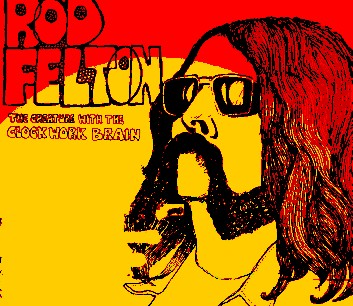
Completing the bill were two of Coventry's best folk players, Rod Felton and Dave Bennett. Rod had been tipped in 1965 as Coventry's answer to Bob Dylan.He also ran the Rude Bear Folk Club at the Hand in Heart pub in Gosford Street and the City Arms Folk Club (now Wetherspoons) in Earlsdon.

Dave Bennett was Coventry's foremost Ragtime guitar player. He ran the Old Dyers Arms Folk Club in Spon End and along with Rod Felton, encouraged Pauline Black, then known as Pauline Vickers, along her path on the local folk circuit,prior to her becoming a member of The Selecter. Dave also gave lessons to Kristy Gallacher who is now of course one of the most popular acoustic artists.

The concert itself was scheduled to start at 10 am and run through until 1pm. The weather was good and the turn was brilliant. It was packed in the central area by the underground toilets and people were up on the balcony.

At one stage, Memories, who were playing all the hit songs of the day, had to stop to announce details of a child that had been lost in the crowd. The child was found very quickly and reunited with its parents.

Halfway through 'Memories' set, however, the police came along and told the organisers to turn off the amplifiers and when asked why, were threatened with seeing the inside of a police cell. Of course, the concert did come to a close but not without protest. Bob Rhodes produced all the permissions but his efforts and his status were to no avail!

People were then encouraged to sign a petition or write letters.The equipment had barely been cleared away when someone produced a lunch time edition of the Coventry Evening Telegraph - the concert was on the front page with the headline Concert Deafens Shoppers. Of course this came as a complete surprise to the organisers who had only noticed scores of people enjoying themselves.

Trev Teasdel, Editor of Hobo Magazine and co-organiser of the concert and who provided the event information for this article, recalls the irony of it all! "We organised the concert to draw attention to the work we were doing at the Hobo Workshop, and the police closing the event down resulted in 7 days of free press coverage, much more than we could otherwise have hoped for!

It was nonetheless a great disappointment having put all the work in and a shame for the bands and singers that never got to play! But ignoring Sunday, we had a piece in the Coventry Evening Telegraph for 7 consecutive days, including a whole editorial dedicated to us. there were letters,articles and we hit the front page! Bob Rhodes and I were also interviewed by the Coventry Journal, CET's rival, whose offices were over the road from the old Telegraph Office."


The Upper precinct in the 60's and 70's where the concert was held. The inner area and the balconies were packed with shoppers and their children watching the concert. The stage was by the fountains facing up towards the spire.

Front Page Coventry Evening Telegraph - This piece appeared Saturday Sept. 14th 1974 on the front page of the lunchtime edition  while we were packing up. The paper were quick off the mark to report that the concert had been closed down by the police.

This appeared in the Monday (16th Sept) edition of the Coventry Evening Telegraph. Youth Worker Bob Rhodes who had got the permissions for us in official capacity, went in to talk to the paper about the issue - this was the result.


Liz Scott - Hobo Workshop Secretary got her letter to the editor in on Tuesday 17th September 1974.
Meanwhile many wrote in to the paper.

By Weds 18th September 74, such was the response that the Editor of the Coventry Evening Telegraph was moved to dedicate a whole editoria to the Hobo Workshop, taking a balanced view.

Thursday 19th September 74 was the turn of  the city's rival paper - The Coventry Journal, based opposite the Coventry Telegraph office. Bob Rhodes and Trev Teasdel were interviewed in their offices and this was the dramatic result!


On october 3rd. 74 the Coventry Evening Telegraph published a letter to the editor by Trev Teasdel, editor of of hobo magazine and Co-organiser of the Hobo Workshop. Trev had sent a few quite long letters. One was composed of TS Eliot Wasteland quotes  and one in particular was suitable for publication although the editor asked for permission to edit it - which was granted.


Here is the letter from the editor asking for permission to edit the letter.


In the original letter I'd mentioned some our future ideas which included a Coventry Music Festival (long before the  Godiva festival was thought up), Trench Coat - a second magazine concentrating on more social issues than Hobo. Children's creative workshop with arts practitioners. The Coventry Voluntary service council at the time provided volunteers to work on playschemes during the summer.  We had also started a street theatre workshop and Alternative film night at the Holyhead. There were quite a few ideas we had some of which took off and some which didn;t see the light of day.

Memories - first left Paul Ashfield - lead guitar,
second left Tom Ryan drummer 
third back row Peter Hewins 
[ passed away peacefully at Derriford Hospital on August 19th 2010, aged 56 years. 
fourth back row Ray Borkowski bass [Ray Barry]
front row Peter Hughes vocals .

An earlier article in september 1974 on the Hobo Workshop, with Analog performing their first ever gig at the Holyhead Youth Centre. Analog had a number of members in the band who later formed the two tone band Reluctant Stereotypes - including Steve Edgson, Paul Brook, Mick Hartley. 


A few of the bands who played at the Hobo Workshop on a Monday night 1974. Fission was Johnny Adams's band - later in Squad - Terry Hall's first band.

Analog on stage at the Hobo Workshop - Holyhead Youth Centre. Appearing in the photo also Bob Rhodes, Liz Scott, Trev Teasdel, Phil Knapper (older brother of Stu Knapper - later of punk band Riot Act.).

Holyhead Youth Centre, Birth place of  Two Tone (Selecter and Specials) and also the Hobo Workshop.

Cover on Hobo Magazine featuring Mark Rider (now of Skawaddy) and Ray Barrie who appeared in Memories who played in the Shutdown Concert.

By November 1974, the Hobo Workshop had moved to upstairs at the Golden Cross and this is Trev's flyer for it. Horace Panter played for us in 1975 with a jazz rock band I knew as Rickie's band and later two Toners Neol Davies, Charley Anderson, Desmond Brown and John Bradbury came along to one of the sessions. 


Midnight Circus was Neil O'Connor's band in 1974 - they later became the Flys who made the single Molotov Cocktail in 1979. Neil later played with his sister's band Hazel o'Connor's Megahype.

Another early press cutting fromthe Coventry Journal in 1974 regarding the Hobo Workshop.

This one was from the Coventry Evening Telegraph.

Dave Pepper, later of the X Certs, was down to perform a the precinct concert with his first band Phoenix. Sadly the Police shut the concert down before they could play.

Rod Felton - Coventry's folk player extraordinaire, was also waiting in the wings to play - 

And Ragtime Guitarist Dave Bennett