Tuesday, October 7, 2014

Hobo Workshop - Concert that Led to 7 Day Protest

For the Coventry Telegraph, Pete Clemons tells the story of the 1974 Coventry precinct concert organised by the Hobo Workshop, an offshoot of Hobo Coventry Music and Arts Magazine, originally based at the Holyhead Youth Centre in Coventry c September 1974.


One of the aims of Hobo magazine had been to create a venue to help get new bands and artists started and for creative activities like Street theatre, alternative films, jam sessions and much. It was facilitated and supported by the City Centre Project - a youth project created by Coventry Voluntary Service Council to help young people with problems of homelessness, unemployment, alcohol or drug dependency etc. Bob Rhodes, the Detached Youth Worker needed to reach young people who maybe in need of help and Hobo magazine had identified a number of youth problems. Bob therefore worked with us and in doing so facilitated our wider aims to provide a venue and facilities for budding musicians in the city. In order to publicise the work and the gigs, we collectively organised a Saturday concert in the centre of Coventry with a number of bands and a couple of folk performers identified in the article. However the concert was closed down by the police and a 7 day protest in the press ensued - the cuttings are below and Pete Clemons tells the story. Below is a readable version, split into two parts so the small print can be read.


The Concert That Led To A 7 Day Protest
by Pete Clemons

The Coventry Ring Road or the A4053 as its less widely known as, which encompasses the old and new Cathedrals, the majority of the university, various shopping centres, the Skydome arena, and many other businesses, was finally completed and officially opened during September 1974.

Like it or loathe it there is no denying that it was fairly unique and innovative at the time. For a start it was the only complete ring road in the country.Other cities did create ring roads to alleviate town center traffic problems but none of them were fully completed.

Construction began in the late 1950's and the first phase was ready in 1962 but was not fully completed until 1974, 12 years after the first section of the ring road opened and some 20 years after the ring road had first been planned.

Jimmy Powell and the Dimensions were appearing at Mr Georges club and by coincidence the Belgrade Theatre was staging a musical titled "The Only True Story of Lady Godiva". Bill Glazier, Dennis Mortimer, Willie Carr, Mick McGuire, Jimmy Holmes and Les Cartwright were just some of the names in an injury hit at Coventry City Squad who were jointly managed at the time by Gordon Milne and Joe Mercer and were fighting against relegation from Division 1 (now the Premier League).

The now defunct Coventry sporting club had just beaten Moor Green (also now defunct) to secure a place in the second qualifying round of the FA Cup where they met Atherstone.

A striking headline in the Coventry Evening Telegraph from the Monday of the same week that the ring road fully opened, read "Switched Off Pop Group Claimed 'We Were Persecuted!".

The previous Saturday, The Hobo Workshop, based in the Holyhead Youth Centre, Lower Holyhead Road, held a concert in the precinct / Broadgate. You need to be able to picture how Broadgate was laid out but the stage was in front of the fountains facing up to Broadgate island and the then underground toilets. 

What had been intended as a promotional event for the Hobo Workshop / City Centre Project turned into a 7-day protest campaign with a petition, everyone writing letters to the local press and also interviews with journalists. Mostly with the Coventry Evening Telegraph but also with a rival newspaper The Coventry Journal based over the road from the Evening Telegraph and also in Corporation Road. 

Hobo Workshop had ideas about benefit concerts and festivals and discussions led to plans for putting on a concert in the Precinct that would publicise the work of the Hobo Workshop along with the City Centre Project run by Bob Rhodes and which was an informal area for young people who might need assistance with problems such as unemployment, drug or alcohol dependence, homelessness or just personal problems. 

The concert was also to be a showcase for local bands and singer songwriters. Bob Rhodes, in his official capacity, got all the necessary permissions from the Chambers of Commerce, Chief of Police etc. transport and a PS System had also been arranged and flyers were produced as well as a programme of all the bands that were due to appear.

These bands included Memories, a band led by Paul Ashfield on lead guitar, Tom Ryan on drums, Ray Barrie (Borkowskie) on bass. Memories played hits and were suitable for all ages and tastes. They also had a residency at the Smithford Arms, which was across the road from the Coventry Theatre. Phoenix was a band led by Dave Pepper and his first band. Dave would of course resurface with the X Certs who emerged out of the Punk scene and were very popular during the Two Tone era and he was also in the Blitzkrieg Zone.

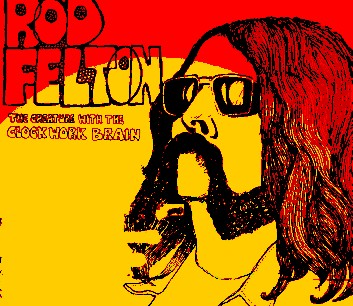
Completing the bill were two of Coventry's best folk players, Rod Felton and Dave Bennett. Rod had been tipped in 1965 as Coventry's answer to Bob Dylan.He also ran the Rude Bear Folk Club at the Hand in Heart pub in Gosford Street and the City Arms Folk Club (now Wetherspoons) in Earlsdon.

Dave Bennett was Coventry's foremost Ragtime guitar player. He ran the Old Dyers Arms Folk Club in Spon End and along with Rod Felton, encouraged Pauline Black, then known as Pauline Vickers, along her path on the local folk circuit,prior to her becoming a member of The Selecter. Dave also gave lessons to Kristy Gallacher who is now of course one of the most popular acoustic artists.

The concert itself was scheduled to start at 10 am and run through until 1pm. The weather was good and the turn was brilliant. It was packed in the central area by the underground toilets and people were up on the balcony.

At one stage, Memories, who were playing all the hit songs of the day, had to stop to announce details of a child that had been lost in the crowd. The child was found very quickly and reunited with its parents.

Halfway through 'Memories' set, however, the police came along and told the organisers to turn off the amplifiers and when asked why, were threatened with seeing the inside of a police cell. Of course, the concert did come to a close but not without protest. Bob Rhodes produced all the permissions but his efforts and his status were to no avail!

People were then encouraged to sign a petition or write letters.The equipment had barely been cleared away when someone produced a lunch time edition of the Coventry Evening Telegraph - the concert was on the front page with the headline Concert Deafens Shoppers. Of course this came as a complete surprise to the organisers who had only noticed scores of people enjoying themselves.

Trev Teasdel, Editor of Hobo Magazine and co-organiser of the concert and who provided the event information for this article, recalls the irony of it all! "We organised the concert to draw attention to the work we were doing at the Hobo Workshop, and the police closing the event down resulted in 7 days of free press coverage, much more than we could otherwise have hoped for!

It was nonetheless a great disappointment having put all the work in and a shame for the bands and singers that never got to play! But ignoring Sunday, we had a piece in the Coventry Evening Telegraph for 7 consecutive days, including a whole editorial dedicated to us. there were letters,articles and we hit the front page! Bob Rhodes and I were also interviewed by the Coventry Journal, CET's rival, whose offices were over the road from the old Telegraph Office."


The Upper precinct in the 60's and 70's where the concert was held. The inner area and the balconies were packed with shoppers and their children watching the concert. The stage was by the fountains facing up towards the spire.

Front Page Coventry Evening Telegraph - This piece appeared Saturday Sept. 14th 1974 on the front page of the lunchtime edition  while we were packing up. The paper were quick off the mark to report that the concert had been closed down by the police.

This appeared in the Monday (16th Sept) edition of the Coventry Evening Telegraph. Youth Worker Bob Rhodes who had got the permissions for us in official capacity, went in to talk to the paper about the issue - this was the result.


Liz Scott - Hobo Workshop Secretary got her letter to the editor in on Tuesday 17th September 1974.
Meanwhile many wrote in to the paper.

By Weds 18th September 74, such was the response that the Editor of the Coventry Evening Telegraph was moved to dedicate a whole editoria to the Hobo Workshop, taking a balanced view.

Thursday 19th September 74 was the turn of  the city's rival paper - The Coventry Journal, based opposite the Coventry Telegraph office. Bob Rhodes and Trev Teasdel were interviewed in their offices and this was the dramatic result!


On october 3rd. 74 the Coventry Evening Telegraph published a letter to the editor by Trev Teasdel, editor of of hobo magazine and Co-organiser of the Hobo Workshop. Trev had sent a few quite long letters. One was composed of TS Eliot Wasteland quotes  and one in particular was suitable for publication although the editor asked for permission to edit it - which was granted.


Here is the letter from the editor asking for permission to edit the letter.


In the original letter I'd mentioned some our future ideas which included a Coventry Music Festival (long before the  Godiva festival was thought up), Trench Coat - a second magazine concentrating on more social issues than Hobo. Children's creative workshop with arts practitioners. The Coventry Voluntary service council at the time provided volunteers to work on playschemes during the summer.  We had also started a street theatre workshop and Alternative film night at the Holyhead. There were quite a few ideas we had some of which took off and some which didn;t see the light of day.

Memories - first left Paul Ashfield - lead guitar,
second left Tom Ryan drummer 
third back row Peter Hewins 
[ passed away peacefully at Derriford Hospital on August 19th 2010, aged 56 years. 
fourth back row Ray Borkowski bass [Ray Barry]
front row Peter Hughes vocals .

An earlier article in september 1974 on the Hobo Workshop, with Analog performing their first ever gig at the Holyhead Youth Centre. Analog had a number of members in the band who later formed the two tone band Reluctant Stereotypes - including Steve Edgson, Paul Brook, Mick Hartley. 


A few of the bands who played at the Hobo Workshop on a Monday night 1974. Fission was Johnny Adams's band - later in Squad - Terry Hall's first band.

Analog on stage at the Hobo Workshop - Holyhead Youth Centre. Appearing in the photo also Bob Rhodes, Liz Scott, Trev Teasdel, Phil Knapper (older brother of Stu Knapper - later of punk band Riot Act.).

Holyhead Youth Centre, Birth place of  Two Tone (Selecter and Specials) and also the Hobo Workshop.

Cover on Hobo Magazine featuring Mark Rider (now of Skawaddy) and Ray Barrie who appeared in Memories who played in the Shutdown Concert.

By November 1974, the Hobo Workshop had moved to upstairs at the Golden Cross and this is Trev's flyer for it. Horace Panter played for us in 1975 with a jazz rock band I knew as Rickie's band and later two Toners Neol Davies, Charley Anderson, Desmond Brown and John Bradbury came along to one of the sessions. 


Midnight Circus was Neil O'Connor's band in 1974 - they later became the Flys who made the single Molotov Cocktail in 1979. Neil later played with his sister's band Hazel o'Connor's Megahype.

Another early press cutting fromthe Coventry Journal in 1974 regarding the Hobo Workshop.

This one was from the Coventry Evening Telegraph.

Dave Pepper, later of the X Certs, was down to perform a the precinct concert with his first band Phoenix. Sadly the Police shut the concert down before they could play.

Rod Felton - Coventry's folk player extraordinaire, was also waiting in the wings to play - 
And Ragtime Guitarist Dave Bennett


Tuesday, September 23, 2014

Vince Martin and the Vampires

Pete Clemons with memories from Vince Martin of the Vampires, Coventry 1950's / early 60's for the Coventry Telegraph.


Fangs for the Fangs for the music Vince!
Pete Clemons
OVER the years much has been written about the swinging 60s scene in Coventry. It was a very special time and, I personally, think it is very important to document as much about it as possible for future generations to understand and maybe even learn from. The same of course can be said for the 1950s but, with the passing of time, it is that bit more difficult to gain first-hand information from that period.

For people who grew up during that era it might appear as though the 1950s scene has all but been forgotten about. As such it is great to be able to have the odd conversation with people like Reg Holliday and probe them for anecdotes from then.

So what was life like back then for a teenager growing up through that era and who had a keen interest on the music at that time? A recent conversation between Reg, and some of his old friends from that era, began to bring back a lot of memories.

He was reminded that upon leaving school he was able to walk straight into a reasonably paid job as a trimmer at the Humber car factory. Back then he would spend Saturday mornings in Jill Hanson's record shop listening to, and buying, the latest chart hits.

The Sunday night concerts at the Hippodrome, during the mid-1950s, always attracted a capacity audience and provided a good mixture of pop stars, jazz bands and large orchestras such as Billy Cotton, Count Basie, etc. The concerts would finish at around 9pm and the younger generation would then pour out of the theatre and onto the 'Bunny Run' which was the then way of meeting members of the opposite sex. 

The 'Bunny Run' circuit took in Trinity Street, Ironmonger Row, The Burges and Corporation Street. The lads, it seemed, would stroll around this square in a clockwise direction while the girls would walk anticlockwise. This square included a couple of coffee bars and a few late night cafes. When I say 'late night' you need to understand that closing times in those days were 10.30pm. Each one of these establishments had a juke box and at least one pin ball table and became meeting places for those walking around on the 'Bunny Run'.

Reg's own record collection included the likes of Pat Boone, Guy Mitchell, Dean Martin, Johnny Ray, Nat King Cole and Frankie Laine. However, all those records would find themselves placed in the attic to make way for the skiffle sounds of Lonnie Donegan, Chas McDevit and The Vipers that began to appear during the second half of the mid 1950s. So influenced, was Reg, by this music that he set about creating his own music related evening. During March 1957 he decided to organise a charity show and had over 100 applications from teenagers who wanted to take part.

Seventy were selected and three shows were given at the Cheylesmore Community Centre. Two of those shows were for the Coventry and District Spastics Society and one for the Canine Fund.

About a year later Reg formed a small group to hold charity dances. He became the vocalist and the others were guitarists Robin Bailey (whose skiffle group had taken part in those earlier shows), Geoff Baker, Phil Packham and drummer Ronnie Cooke.

This group played for two all-night marathons in aid of funds for local charities and things went from strength to strength as they were invited to play for dances at Transport House, youth clubs, working mens' clubs and many other venues. The result of a challenge by another group at The Rialto Casino gave the group a half hour slot on Tuesdays and Fridays for two and a half months. 

This course of events was actually the embryonic stage for the formation of The Vampires who came together during 1959. Reg Holliday also changed his name to Vince Martin just as the band had formed. There was no particular reason why it should be Vince Martin. It just seemed to fit with the image of The Vampires at that time.

The band's initial line-up was Vince Martin, Geoff Baker, Phil Pack-Packham and Barry Bernard. However, depending on who you talk to that initial line-up may or may not have included Keith Parsons. 

What is for sure though is that by the end of 1960 The Vampires had the more stable line-up of Vince, Robin Bailey, and Barry Bernard on bass, guitarist John Buggins, drummer Keith Parsons and a second vocalist John Hounslow.

Their advanced bookings had spread to Warwick, Rugby and Leicester. In addition, the band never refused a request to play for charity if they were requested too.

So busy were The Vampires that they enlisted the services of Keith Parsons' elder brother, Bryan, as assistant manager. The band's progress was also shown by way of matching suits and upgrades to equipment such as microphones, guitars and drums.

Where the group failed though was in the area of amplification and this was highlighted when they failed a BBC audition for that very reason during 1960. Despite that setback they went ahead and purchased a van for the purposes of a holiday tour which was planned for the summer of 1961. During the lifetime of the band other local musicians performed for The Vampires. Johnny Washington, Alan Palmer and later on during 1963 Murray Winters and Sherlee Scott all passed through the band's ranks. The last recorded date I have for a Vampires gig was during 1965.

Vince, as he was more widely known by now, actually left The Vampires during the early 1960s. He became more interested in, and felt he could make a greater impact, with the promoting of concerts. As a result he firstly created Vince Martin Beat Groups. Then later on, during the 1962/63 period, he also started up an entertainment agency called the Big Three Enterprise and based them in Whitefriars Street. Big Three handled bookings for artists like Cilla Black, Lulu and The Hollies. 

Apparently Vince was always on the go and secured a lot of work and opportunities for a lot of young up and coming musicians in the Coventry and beyond. In fact he also organised tours for bands across the UK, Wales, and Scotland and even in Europe. Big Three also promoted for venues like the Embassy Club in Skegness.

At the turn of 1962/63 Big Three and VM rock bands joined forces and then, toward the end of 1964, they in turn teamed up with Mick Tiernan and Jack Hardy at Friars Promotions who had also been based in Whitefriars Street.

Between then this new venture would become known as Friars Promotions and Agencies. At about the same time they left their respective offices in Whitefriars Street and moved to new premises on the corner of Albany Road and Broomfield Road in Earlsdon.

Music trends may have been changing toward the end of the 1960s but Vince moved along with them. He still worked for Friars who, by now were promoting nationally known bands around the Midlands, but this was combined with working at venues like The Walsgrave Pub where he became the house DJ for several years from around 1967. This would continue through to the early 1970s where he eventually moved on to The Mercers Arms and became that venue's DJ in 1971.

Vince Martin remained in the music business till 1972. As everyone by now knew him as Vince he remained as such when he began his next venture in the holiday business. For that though, he combined his stage name and the surname he was born with and, thus, became known as Vince Holliday.

Says Vince, "Other than those that were part of the rock 'n' roll heydays I don't think that anyone can truly imagine just how big the Coventry and district music scene was. Some of the more popular bands were, at times, coping with two engagements per night / seven nights per week. As office manager for Friars Promotions I was responsible for the majority of their gigs and being a DJ I also shared the stage with these guys on a regular basis. 

"In those days we were just a "In those days we were just a bunch of young people having a good time and never did we imagine that some 50 years down the line we would have tribute events and people writing about us."

Today, and in his late 70s, Vince may not be as active as he was but still organises and gets involved with a lot of charity work for causes such as 'The Myton Hospice Appeal.' .' He also keeps a keen eye and looks after the interests of The Phoenix Rock 'n' Roll Band who he arranges gigs for as well as posts out occasional newsletters.

And throughout the vast majority of Vince's journey he has been accompanied by his wife Sue who really deserves special mention and praise as she has been at his side for over 50 years.


The VAMPIRES
circa 1959-65 - Sources Broadgate Gnome /Rex Brough


Beat group

Line up: Vince Martin (vocals), Johnny Washington (vocals), Graham Sutton (bass), Alan Palmer(drums), Johnny Buggins, Robin Bailey, Barry Bernard.

Keith Parsons also drummed at one point.

Managed by Vince Martin of JRD Entertainments in Whitefriars Street.


From Pete Clemons in Coventry Telegraph

"The VAMPIRES formed during 1959 and existed till 1965. The band’s initial line up was Vince Martin, Geoff Baker, Phil Packham and Barry Bernard. However, depending on who you talk to, that initial line up also included Keith Parsons.

Several line-up changes occurred during the bands existence although, yet again, I have several differing lists of who was with them and at what stage they were in.

Although they differ, the names remain constant and Johnny Washington, Johnny Buggins, Robin Bailey, Alan Palmer and Ronnie Cooke all passed through the band’s ranks.

The venues they played included: the Bantam pub, Hen Lane; The Milano coffee bar, Radford Road, the Transport and General Workers Union HQ and the Police Ballroom. They also had a residency at the Lutterworth Working Men’s Club for 12-18 months on a Wednesday evening. http://www.coventrytelegraph.net/news/coventry-news/your-nostalgia-keresley-rock-fanatic-3036773

................................................


Vince Martin (Aka Vince Holliday)

From Rex Brough Memories from Modie Albrighton

"The singer in the Vampires was Vince Holliday who changed his name to Vince Martin. In

every band there is one that stands out and Vince was the one. Showman, salesman, front man and always had time to help other bands. Later he started an Entertainment Agency called the Big Three Enterprise in Whitefriars street bookings for people like Cilla Black, Lulu, and the Hollies. He also handled other bands like the Sorrows, Matadors, and the Tears. He was always on the go. He became the manager of the Peppermint Kreem"


Pete Chambers from the Coventry Telegraph - It's back to the 60s when The Vampires ruled the music scene.
AS THE former frontman of "Coventry's first rock 'n roll band," Vince Martin and the Vampires, I was pleased to be reminded in a recent Telegraph article that the group actually appeared at The Hawthorn Tree, Tile Hill, way back on January 6, 1963.

The band was originally formed in 1959 to take part in a fundraising concert for the Baginton Fields School for special needs children.

We proved so popular that we eventually went on to appear at many of the country's major venues, including Blackpool Tower, various holiday parks and the famous Belle Vue Ballroom with Jimmy Saville.

The career spanned a period of 15 years until finally forced to disband in 1973 due to the majority of the popular venues converting to bingo and the disco craze.

Many of the band's previous followers will no doubt be surprised to hear that all the original members of The Vampires are still alive and kicking.


We occasionally meet up at local jam sessions and the annual "Call Up The Groups" reunion and despite being OAPs, some of us are still involved in the music scene. 
...........................................

VINCE HOLLIDAY Jon Washington is a popular recording artist currently living in Las Vegas, Phil Packham is currently a member of Coventry's first supergroup "Rock-It" and Allan Palmer has been in Commanding Officer of the Coventry Corps of Drums for many years.

As for myself, I have been booking manager for the popular "Phoenix Rock 'n Roll Showband" for the past two years and enjoying every minute of it.

May I, on behalf of all the many former local musicians from the Rock 'n Roll heyday, thank both writers Peter Chambers and Peter Clemons for their interest and contributions in respect of keeping the city's music history alive.

It's greatly appreciated and brings back a lot of brilliant memories for numerous Telegraph readers.

Vince Holliday (aka Vince Martin) William and Mary Cottages, Earlsdon Avenue South, Styvechale.

........................................

And from Pete Clemons in Coventry Telegraph - an article on Johnny Washington 


Vince of Vince Martin and the Vampires on the Radio

The first broadcast from 2015 on BBC Radio Coventry and Warwickshire. Vince talks about his memories of playing in Coventry's first Rock n Roll band and his role in Friars Promotions that put some many bands, artists and discos into Coventry's M & B pubs.


This is Vince Martin of the Vampires talking on BBC Radio Coventry and Warwickshire about the band and Friars Promotions - March 2015


There more of Vince's broadcasts on BBC Radio Coventry and Warwickshire to be found here 


Vince started Friars Promotions in Coventry - Read about it here


Tuesday, September 2, 2014

The Mosquitos are Back (Coventry RnB band)

Pete Clemons looks at the return of Coventry RnB band The Mosquitos in the Coventry Telegraph.

Featuring  Nick Robotham, Steve Wallwyn, Steve Aaron, Horace Panter, and Rick Medlock


Check them out on Facebook https://www.facebook.com/pages/The-Mosquitos/200217360021397


Mosquitos are back buzzing!
By Pete Clemons

Rhythm and Blues, often abbrieviated to R&B or RnB, is a genre of popular music that originated in the early part of the last century. Over the years the term has had a number of shifts in meaning. One of those shifts, British rhythm and blues, was developed in the early - 1960s having been influenced heavily by its American counterparts. Successful early British bands which fell into that genre included the likes of e Rolling Stones, e Animals and e Yardbirds who, along with their own compositions, also covered songs by Chuck Berry, Bobby and Shirley Womack and many others.

Successful early British bands which fell into that genre included the likes of the Rolling Stones, thee Animals and the Yardbirds who, along with their own compositions, also covered songs by Chuck Berry, Bobby and Shirley Womack and the British Mod culture that sprang up during the mid 1960s was musically centred on rhythm and blues. The British R&B bands produced music which was very different from its roots with the emphasis on guitars and, arguably, played with a greater energy.

Many of those 1960s bands, toward the end of that decade, shifted style and created what became known as psychedelic, progressive and hard rock. But whatever music they produced those rhythm and blues structures and infuences would still be a major component within that sound. A Warwickshire based band currently doing the rounds and whose set list and performance is loyal to those heady days of the 1960s and 1970s are the Mosquitos. 

The Mosquitos are also unique for several reasons. Firstly they are a seasonal band. Due to geographical reasons they do not begin touring until around May and continue gigging through to July. Another reason for their uniqueness is that the band is pooled from a group of musicians as opposed to having one permanently fixed line-up. Finally, no band member has ever quit the Mosquitos.

The idea for the band came from vocalist and harmonica player Nick Rowbotham back in 1978. The original concept, which still works today, was to use musicians from differing musical backgrounds and experiences to work with him to perform original material and classic R 'n' B tunes. And, based around Nick, a selection of musicians would be put together based on who was available at the time.

Initially the Mosquitos, who were Leamington Spa based, was made up of Nick and his long time friend and bass player Keith Hancock together with guitarist Steve Walwyn, and drummer Andy Bentley. After a couple of years the band was expanded and included guitarist Steve Aaron and bass player Horace Panter. In fact during 1981, when the Specials single Ghost Town was at number one in the singles chart, Horace famously celebrated by performing with the Mosquitos at the Green Dragon In Stratford-Upon-Avon.

The Mosquitos recorded and released a single during 1982 that contained original songs 'Something out of Nothing' as the A side and 'How Could they Know' on the flip side. It was released on the Discovery Label who was also based in Leamington Spa. However, due to some of the band members having other commitments, the single was never properly promoted.

However the track 'Something out of Nothing' was not lost forever. Lee Brilleaux, the enigmatic leader of Dr Feelgood, got to hear the song and was well impressed. So much so that he used it on the B side of e Feelgood's 1983 single 'Crazy About Girls' released on the Chiswick label.

It was at this point that it became clear that the band needed to have an even more liquid membership. So the Mosquitos 'family' was extended further. is resulted in drummer Rick Medlock, fiddle player Martin Bell and guitarist Phil McWalter all being drafted in. The Mosquitos would continue to play many gigs in pubs, clubs and universities and built a loyal following.

Due to the liquidity of the band the various individuals who made up the group were more involved in other projects. As such the musicians were spending less and less time to devoted to the Mosquitos. And by 1985, with all the band members doing other things, the group simply faded out. Despite this the band members remained great friends and even during their hiatus, they still found the time to perform the very occasional Mosquitos gig.

Wind forward more than twenty years and, during 2007, Rick Medlock quite by chance met up with Nick Rowbotham. Rick had long since retired as a musician but, within months of this meeting, he had regained his old 'mojo' and was back behind a drum kit again. After several short stints with other bands Rick became the prime mover in motivating and re-energising the Mosquitos into action again by pulling together this liquid line-up.

The Mosquitos began gigging again in 2011. And, every year since, the call goes out to see who is available. Their first year back saw the band perform a handful of gigs over the course of a month. e following year saw them gigging for two months. And now, in 2014, it's certainly three months, and possibly four months worth of work, as the gigs continue to pour in.

Once again the Mosquitos are generating a tremendous amount of interest. And this is re ected by way of the spread of gigs across the region. And behind the scenes drummer Rick Medlock works hard to secure the gigs and maintain the website. The band are certainly beginning to regain their fan base again as word spreads and each gig seems to bring with it a growing and appreciative audience.

Largely the 'squad' gigging today, with the exception of a few notable additions, is much the same as it was thirty years ago. e additional musicians are guitarist Baz Eardley, bass player Chris Wright and guitarist Pete Gardner. And each of these musicians bring with them an outstanding pedigree. Dust My Broom, Bullfrog Blues, I'd Rather Go Blind, Walking Blues, Killing Floor, Shakin' All Over are just a selection of the band's songs which get covered. But their repertoire is quite extensive and, as such, no two gigs are the same.

These guys are no spring chickens. Yet despite their advancing ages The Mosquitos still play with passion and enthusiasm. They may be playing for fun but make no mistake about how serious they take their craft. Pride in what they deliver would not have it any other way.

The 2014 season is now over. Let's hope the 2015 season continues where the last one ended for the band. In their own words, next time you see an advert for a gig near you, then come and join the malarky that is e Mosquitos!


Reg Calvert - A Rock n Roll Rollercoaster

Another Pete Clemons special from the Coventry Telegraph. Pete takes a look at a new biographical trilogy of the life of  Pop Music impresario Reg Calvert.


A rock 'n' rollercoaster life for Reg.
By Pete Clemons.

IN his short life Reg Calvert completed his national service, he was a hairdresser, he ran a sweet shop, he worked on fairgrounds selling popcorn. By night he would play the piano in clubs, to try to make extra money to make ends meet. He was also a compere for the big bands.

Reg never appeared to settle. Life was just one huge adventure. It was packed with highs and lows. ese include when, for example, he struggled to find employment and for three years lived in a caravan in an apple orchard. But then he took out a mortgage to finance the purchase of Clifton Hall near Rugby. Using a more up to date expression, he lived life on the edge.

And then one day, during the mid-1950s, he heard 'Rock Around the Clock' by Bill Haley and the Comets. This became a defining moment in Reg's life. His attentions shifted and he began his next great adventure and that was to bring rock 'n' roll to England. This dream culminated when his life was cut tragically and unfairly short.

Whenever I read about Reg Calvert I get the impression that this music impresario simply wanted to live the dream. Not only that but it seemed as though he wanted to share that philosophy with everyone and join him in living life to the full.

And now Reg Calvert's amazing, yet incredibly short, life is being serialised in a trilogy of books. Book one, released during May 2014, is entitled 'Popcorn to Rock 'n' Roll' and covers the period from 1946, the year he married, through to 1960. Book two, it is hoped, will see day of light during winter 2014/15 and will cover the Clifton Hall period which was also known as the school of rock and where Reg nurtured his dance hall acts. Book three is scheduled for the summer of 2015 and is titled 'Life and Death of a Pirate.' . is will cover the days when Reg became involved in pirate radio and which led to his demise during June 1966.


The books are being written by Reg's daughter Susan Moore (nee Calvert) and here she is laying it all out through her eyes and her memories. The first book has been described as 'an exciting story that follows social change and music trends in the early days of rock 'n' roll, giving a humorous and poignant account of life and events 1946-1960.

I recently came across an old newspaper cutting from 1962. This was when Reg Calvert's dances, or Teen Beat shows, were just taking o at the Co-op Hall in Nuneaton. I have reproduced it below.

'It's a far cry from making popcorn at a seaside factory to promoting one of the biggest 'beat' shows in the Midlands - one that stretches to the south coast, and as far north as Manchester.

Yet that is what Mr Reg Calvert has done with his 'Teen Beat' shows, one of which is a regular and popular Friday night feature at the Co-op Hall, Nuneaton.

At the moment Mr Calvert has three young men who have a future in show business - with records. He is soundly off financially, and he moves not only up and down the country, but on the continent.

But at one point Mr Calvert wondered where the next meal was coming from. After promoting his own little shows in a Yorkshire village near Huddersfield, and then to booking bigger bands for his shows, he had to go into the army. 

He was confined to barracks for 21 days for running dances outside the camp. Then he married his wife Dorothy. She ran these outside dances until he was demobilised.

After this he opened a recording studio in Darlington. It wasn't a success. He lost all money he had saved in the army. There seemed little hope. So he went to Southampton, with no capital, and nothing but hopefulness. He started making popcorn.

Things turned out brighter. He soon opened two retail shops, and gained enough capital to start promoting shows again, in the Bannister Ballroom in Southampton.

Over the years the public taste in music altered. The Lonnie Donegan style of skiffle really came into its own, and Bill Haley and his Comets arrived.

So Mr Calvert also changed. He started promoting rock 'n' roll shows. But he came up against a difficulty. The best groups were not able to be found in Southampton. And he decided to find somewhere in the Midlands to take his road shows. 


He found Clifton Hall, near Rugby, which was just right for what he wanted. It was big enough to house three top groups - Danny Storm and the Strollers, Buddy Britten and the Regents and Robbie Hood and his Merry Men - and it was central enough for his shows.

He promotes these shows at Nuneaton, Weymouth, Andover, Banbury, Cheltenham, Worcester, Evesham, Kidderminster, Burton, Atherstone, Southampton and Rugby. A formidable list for a man who once found it hard to make ends meet. Clifton Hall - the large house that has been termed the 'school' for pop singing - conjures up a picture of young singers making new records and practising all day for the shows to come. And that is just what it is. Mr Calvert, who is electrician, manager and promoter, all rolled into one, has made Clifton Hall the focal point for all his shows.

It is here, with its spacious gardens, recording rooms, billiard room, football pitch and luxurious lounge that Mr Calvert gets his singers to work to make the shows he puts on as perfect as possible.

One song has to be sung over and over again. If the vocal is correct the backing is edited, so that both are in tune. It may take minutes but more often than not it is a matter of hours before a record is ready to be put on the market.

And these boys have a strict disciplinarian in Reg Calvert. His rules: No alcohol, No girls.

But they also have plenty of freedom. There is no set time for bed. If someone wants to play drums or sing in the middle of the night he is entitled to. There is no irate neighbour to come knocking on the door complaining. As Mr Calvert says 'We are a world unto ourselves.'' ' 

After the Clifton Hall period Reg moved into, and was in fact a pioneer of off-shore broadcasting or pirate radio as it was more commonly known as during the mid-1960s. We have recently seen the release of a comedy entitled 'The Boat that Rocked'. The film was set in 1966 and told the fictitious story about the radio rock pirate radio station and its crew of eclectic disc jockeys who broadcast rock and pop music from a ship anchored in the North Sea while the British government tried to have it shut down.

If the film makers are looking for a sequel then they need look no further than the life and times of Reg Calvert. is would enable them to create a movie of the actual true life events that surround the whole pirate radio scene.


Here is a direct link to another article by Pete Clemons on Reg Calvert on this blog.