Tuesday, March 19, 2013

Dave Swarbrick - The Fiddler from Fairport

Peter Clemons zooms in on one of Coventry's most celebrated musicians - Dave Swarbrick who began with The Ian Campbell Folk Group, played in bands with ex members of Coventry's Dando Shaft but is best known for his work with Fairport Convention. Here's Pete's article from the Coventry Telegraph...


Spanish Ladies - Dave Swarbrick with Martin Carthy and Diz Disley


Ian Campbell Folk Group


Whippersnapper - Dave Swarbrick with Coventry's Martin Jenkins and Kevin Dempsey (Ex Dando Shaft) 1984, consisting of Dave Swarbrick (fiddlemandolinvocals), Chris Leslie (fiddle, mandolin, vocals), Kevin Dempsey (guitar, vocals) and Martin Jenkins (mando-cello, flute, vocals). http://en.wikipedia.org/wiki/Whippersnapper_(band)


Crazy Man Michael - Fairport Convention


Tuesday, March 12, 2013

The Trane - Coventry Band Named After John Coltrane.

Pete Clemons looks at the tragic history of a promising 60's Coventry band named after John Coltrane for his latest article in the Coventry Telegraph - The Trane...


Promising band's tragedy.
Pete Clemons 

THE year 1967 was in many ways a special one for the UK.

England was basking in the glory of the football World Cup win of the previous year, Radio 1 was launched at 7am on Saturday September 30 with The Move's 'Flowers in The Rain' being the first record played and the first transmissions of colour TV pictures were being broadcast. This remarkable year also saw The Beatles release their iconic Sgt Pepper's album, Pink Floyd released their debut LP and Mick Jagger and Keith Richards were both jailed for possession of drugs. Locally, Coventry City was promoted to the old First Division (nowadays known as The Premier) and later that same year Jimmy Hill announced that he was standing down as manager.

What was happening nationally was being felt locally particularly by the youth at that time. It was a time of hope, inspiration and expression.

Many beat bands had sprung up in and around Coventry during the mid 1960s. But for one Kenilworth based band 1967 would have a tragic outcome with far reaching consequences and, for some, life would always be tinged with sadness.

The previous year, 1966, had seen the formation of 'The 'Trane' named after jazz saxophonist John Coltrane who, along with Miles Davis and others, was a pioneer of 'free jazz' that inspired many a musician back then and continues to do so today.

The 'Trane were John Green on lead guitar, Nigel Maltby rhythm guitar, Laurie French drums, Geoff Timms bass and John 'Ned' Foyle vocals. John, Nigel and 'Ned' had all been school friends at Kenilworth Grammar. Laurie had met John Green through John's brother while Geoff was a friend and near neighbour of Ned's.

After this coming together through their shared passion for music they practised hard as a unit and eventually felt confident enough to perform live. Stratford Rugby Club was the venue for their first gig and by spring 1967 they had secured their first paid gig at the nearby Chesford Grange Hotel as support to Coventry band 'From the Sun'.

However, just when things had been looking good for the band and everything was beginning to come together, tragedy struck. On August 10, 1967 both Ned and Geoff, aged 18 and 19 respectively, were killed after the Bedford van they had been travelling in crashed head on with a lorry. The pair had been on their way to Hampton in Arden for band discussions and the accident happened just outside of Balsall Common.

According to a police statement at that time: "For some reason the van veered to the offside of the road while travelling toward Stonebridge'. It collided head-on with the seven ton lorry which was un-laden'. This was a very bad accident on a bad stretch of road."

And had it not been for the fact that he had made an on the spur of the moment decision to take a holiday down in Cornwall then John Green may very well have been on that fateful trip.

The band decided to regroup and later the same year recruited the services of Bill Fielding on bass while John Green took over vocal duties.

During their short career The 'Trane played a total of 55 gigs at venues like The Cheylesmore Pub (who once advertised them as The Train), The Navigation, The Plough on London Road and The Hotel Leofric.

Their set, typically, included songs by The Yardbirds, The Troggs, The Kinks and The Small Faces along with the more bluesy music of Chuck Berry, Howlin Wolf and John Mayall's Bluesbreakers whose tune 'Lookin Back' contains John Green's favourite guitar solo.

The 'Trane even secured a support slot to The Jeff Beck Group who appeared in Rugby on December 30, 1967. Later that same evening The Jeff Beck Group who included Ronnie Wood and Rod Stewart also appeared at The Matrix Hall in Coventry.

But after the accident things were never quite the same again. The original spirit of the band had been lost and in 1968, shortly after gigs at the Co-op Hall in Nuneaton and further gigs at The Cheylesmore, The 'Trane split up.

John Green, after a break from music, took up guitar again and performed with bands like Flat Stanley and Sugarcane. Nigel Maltby moved to the peace and tranquility of Cornwall while Laurie French trained to be a teacher. However the last few years have seen both Laurie and John strike up their musical partnership in The Skyline Band and both are now writing and recording their own song compositions in John's state of the art home recording studio.

John Green himself leaves us with these last wonderful words: "What we all thought at the time to be a passing fad was actually a bug whose bite would last a lifetime. There is a whole generation of us 60s muso's out there who still get a huge kick out of the music of that era and some of us are lucky enough to be still making and performing it."

Oh, and one last fact of an event that also happened during the year 1967 - the world lost John Coltrane.


The Trane

Nigel Maltby / Laurie French / Geoff Timms / John Green / Ned Foyle / Based in Kenilworth

John Green's music website

TRANE / SUGARCANE

Here are some soundbites from this website about the Cov 60's band Trane and later developments, You can read the full story and hear a track on this site http://www.skylinesongs.com/music_journey.htm 

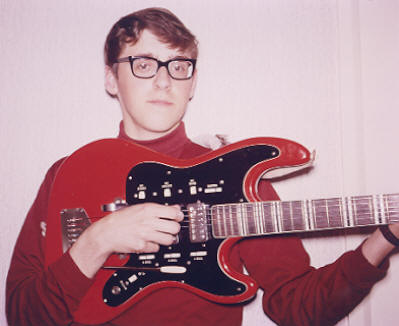
In a few months I’d mastered a few chords and was starting to understand my way around the fretboard. There wasn’t a wide choice of tutorial books then. In fact there were none as I recall, except ‘Play In A Day’ by Bert Weedon, a popular guitar instrumentalist of the 1950s. Bert is 85 now and has a web site here where it seems 'Play In A Day' is still going strong, with over 2 million sold! It helped me a little, but I wanted to learn how to play the hits of the day not old standards like "Whispering". But I found after a while I could listen to records and gradually figure out the chords being used, and then I discovered how the same chord patterns were used in lots of different songs. I either sold or swapped that first guitar and bought a new acoustic which was still only of 'entry level' quality. Necessity being the mother of invention I was going to sing folk music, which at the time was undergoing a big revival with the likes of Bob Dylan and Donovan. Anyway, I didn’t need an amp for folk music.

So in the Summer of 1966 we form a band with myself on lead guitar; Nigel Maltby, a school pal on rhythm guitar; Ned Foyle on vocals; Laurie French on drums and Geoff Timms on (home made) bass. We call ourselves "The ‘Trane" after John Coltrane the jazz saxophonist, emulating the Yardbirds who took their name from the sobriquet of another jazz saxophonist, Charlie Parker.

We practice hard, and place some ads: "Good beat group available for all kinds of bookings. Versatile and above all musical", and print some cards: "The Beat Group for All Occasions" and start gigging in November. Our first gig is a dance at Stratford On Avon Rugby Club and our Dads ferry us and our meagre equipment to and from the venue. At our very first outing we manage to snatch victory from the jaws of defeat. My amplifier expires after the first couple of songs – we grossly underestimate the volume required at a real gig – and I have to plug in to Geoff’s Vox AC30, the sound of bass and lead guitars through the same small amp not sounding good. The spring on Laurie’s snare drum breaks so the snare sound fails but he manages to do a running repair with string. But by the end of the evening with the audience liquored up and determined to enjoy themselves, we finish triumphantly on the Beatles’ sing-along "Yellow Submarine" which we’d never played before and hadn’t a clue how the chords went.

Spring 1967 and we play our largest gig so far at the Chesford Grange Hotel where we’re the support act on a double bill. Our fee: a princely £12.50 for two one-hour sets, £2.50 each. We come a poor second to the other band "From The Sun" and Ned and I lose our voices from not having a loud enough PA. It was as they say, a learning experience. The lead guitarist of the main band kindly points out to me after the gig that I need to use thinner strings in place of the ‘steel hawser’ tape wound variety I was using. I didn’t know that it was the judicious bending of light gauge strings that was enabling Eric Clapton, Jeff Beck et al to get those sweet bluesy sounds I liked. Not only was there a paucity of guitar tutorial books, there was no such thing as guitar magazines so we all lived in our own bubble of knowledge and didn’t know how others got their sounds.

I’ve finished school now and some non-band friends ask me to join them on a short camping holiday in Cornwall. On the spur of the moment I decide to go. The band had been thinking of approaching a girl we knew who we’d thought might make a good lead singer in the band and whilst I'm away Ned and Geoff decide to drive over to see her and discuss it. Together they set off towards Hampton In Arden on 10th August 1967 and just outside Balsall Common crash head-on into a lorry and both are killed outright. Ned was 18 and Geoff 19.


If I hadn’t decided to go to Cornwall on a whim I would have been with Ned and Geoff. There but for fortune. The condition of the van may have been a factor. A month earlier Ned and Geoff had holidayed together in Wales and Geoff had sent me a prescient postcard saying “..van’s OK (touch wood)..”

We reform the band in the autumn, bringing in Bill Fielding from Coventry on bass, but things aren’t the same and the line-up folds a year later in mid-1968. There's a highlight in the last months however, when we play support to the Jeff Beck Group in Rugby on 30th December 1967. Jeff Beck is my favourite guitarist and I can't believe our luck.

It's 1973, I'm 25 and a qualified Chartered Accountant. I own a nice Les Paul Deluxe gold top and it’s the best guitar I’ve ever had, although one day I drop it and it suffers catastrophic damage of the headstock. But I send it off to Rosetti, the Gibson importers, and thanks to an insurance claim I get it back faultlessly repaired and re-sprayed in a beautiful sunburst. I then wish I'd kept the gold top finish.

The band, at first called "Flat Stanley" after a character in a children's book, and then "Sugarcane" plays on and off for the next thirteen years during which time we endure at least five different drummers, until Laurie returns from his Halifax exile in 1977; five bass players and three different second guitarists.


Bob Sharp plays bass with us for about two years before getting married and going to America. His successor is John Rushton who stays for four years or so before moving away from the area. In 1974 we recruit Ian Boycott to take on lead vocals and he also invests in a percussion setup comprising congas, bongos and timbales. Ian stays for a about eight years and also becomes a close friend. Unfortunately Tony Lloyd leaves after nearly two years to join another local band "Vehicle" that has a more attractive line-up for him that includes brass and keyboards, and we then have an unsettled few months with different guitarists and drummers, none of whom are right for us.


In October 1975 the above lineup records 'Pickup Queen' at Bird Sound Studios in Snitterfield, Warwickshire. Written by Ian and myself, we had only an evening to set up and record it, including some rushed overdubs. Dave plays some great drums, which on reflection should have been higher in the mix, and John's bass guitar lines are magnificent; driving the whole thing along nicely. Ian performs the lead vocal, but being a heavy smoker and asthmatic he runs out of breath a couple of times in the song! I wanted the guitar harmonies to sound like Thin Lizzy's but there wasn't time to get the right tones organised. Click on the button to have a listen:


Wednesday, March 6, 2013

Rugby rag Blues festival 1969 with Pink Floyd Free and King Crimson

Pete Clemons, with his Rock-Blues pen, hits newsprint again with his latest article for the Coventry Telegraph. This time up he takes us back in time and over to Rugby for the 3 day Rugby Rag Blues Festival featuring Pink Floyd, King Crimson, Free and so many more rock, blues and folk artists.


The £2 ticket for 3-day festival featuring Free and Pink Floyd; Your memories By Pete Clemons.


YOU would be forgiven for thinking I had completely lost it if I told you that bands such as Free, The Pink Floyd, Taste, King Crimson and a whole host of others had once starred at a major music festival off Ashlawn Road, Rugby. But it is all true.

On the weekend of Friday 12th through to Sunday 14th September 1969 the Rainsbrook area of Rugby hosted a festival that can only be described, due to the constant rain, as a washout. And over time the event has largely been forgotten about. But in hindsight it had the potential to have been of epic proportions.

The weekend had been slap bang between two infamous events. The Rolling Stones Hyde Park concert held in July of that year and another Stones gig held during December at the Altamont speedway track in northern California.

I only mention The Rolling Stones because the event had been organised by the Rugby students RAG (Raising and Giving) charities appeal in conjunction with Sam Cutler, the band's then tour manager. Sam had also been instrumental with, and had played a major part in, the organisation of both of the above mentioned events. He had also been master of ceremonies at the Hyde Park gig.

The festival itself ran over three days and featured a different form of music on each day, a similar format used on the early National Jazz and Blues festivals. The Friday, headlined by Alexis Korner and also included The Groundhogs, was the blues day. Saturday was progressive rock day and included The Pink Floyd, The Nice, Free, Taste, King Crimson and The Edgar Broughton Band. Sunday saw folk rock bands like The Eclection and The Strawbs and also included Roy Harper and Coventry's own New Modern Idiot Grunt Band.

Cost of entry was 12 shillings and sixpence (65p) for day one, a pound for day two and 17 shillings and sixpence (87.5p) for day three. Alternatively, a weekend ticket was available for £2. Among the ticket outlets were Disci on the High Street in Rugby and Fennells on the Lower Precinct in Coventry.

However, to put the whole thing into a little perspective this was late 1969 and some of these bands were still in their infancy. The Nice were fairly well established having just released their third album during September. The Pink Floyd's then current release was 'Ummagumma' and I am guessing that their set list would have been similar to the live disc from that set. King Crimson had yet to release their eponymous debut album. In fact they had been playing live since April.

Rory Gallagher and his band Taste were certainly in demand. After their Rugby gig they played at Mothers Club in Erdington later that evening. And Free, although on the verge of releasing their second album, were still a year or so from releasing their magnificent 'Fire and Water' album which would get them onto 1970s Isle of Wight festival, perform in front of an estimated 600,000 people, and propel them to worldwide success.

Seemingly it cost the RAG committee £3,000 to stage the event and the target was to make a £4,000 profit for charities. At its height on the Saturday evening there were around 2,000 people in attendance but at its lowest on the Sunday afternoon there were fewer than 200. But in the end, after the sums were calculated the event had broken even.

The revellers were described as parading in frills and furs, buckskins and blankets. Some were even bare-footed. However, regardless of how they looked the weekend was totally trouble free. Even the local police described it all as humorous and good natured.

Coventry Telegraph reporter Alan Poole remembers the weekend well though. At the time he had been working for the Leamington Courier and a friend of his, who was at sister paper The Rugby Advertiser, played quite a big role in organising it.

Alan saw an awful lot of live music back then but, as they do, thoughts have tended to blur over the intervening years. However, his most abiding memory was seeing King Crimson's then bass player, Greg Lake, wearing a very eyecatching white suede coat with a white fur collar. He also recalls the dismal weather and the fact that it rained all weekend and the park being like a quagmire. No doubt because of the weather, the crowd was incredibly small bearing in mind how many great bands were there. But, says Alan, what a bill for two quid, eh? After Rugby's extravaganza, Sam Cutler's career went from strength to strength as he organised some of the largest rock and roll events in history. After the Rolling Stones had left him to sort out the aftermath of Altamont, Sam went on to tour manage The Grateful Dead and organised a number of their huge tours and festivals.

Plans to stage a second weekend event for the beginning of the festival season in May 1970 failed to materialise.


Tuesday, February 19, 2013

Roger Lomas - From the Sorrows to Award Winning Producer

NOTE - THIS POST HAS BEEN DELETED AND A NEW VERSION CREATED ON THIS URL 
Click here for the New Roger Lomas article
http://coventrygigs.blogspot.co.uk/2018/02/roger-lomas-from-sorrows-to-award.html

Another piece from the prolific pen of  Pete Clemons - from The  Coventry Telegraph..

The story of Coventry's only Grammy winning musician and record producer - Roger Lomas

Tuesday, February 12, 2013

Rocking at the Ritz - Coventry Venue

Back in the early 60's the Ritz (in Longford Coventry) was the place rock it out. Pete Clemons takes you back there via his Coventry Telegraph article...


Rocking Out At The Ritz. 
Pete Clemons 

THE Ritz in Longford was another of those art deco style fronted buildings erected during the 1930s.

During its last days of activity it was a prominent Asian cinema and was the centre of the Longford community up until it closed. In fact it has remained empty and unused and was due to be demolished as far back as 1982.

But despite the various threats that have hung over it for over 30 years the building still stands on the Longford Road at the junction of Windmill Road and Dovedale Avenue although nowadays there is little more than the shell of it left to give an indication of its former life.

During the late 1950s and early 1960s, and for the youngsters back then, rock 'n' roll was king and Coventry, like many other towns and cities up and down the country, was awash with teenagers forming their own bands and organising dances.

All manner of pubs and coffee bars readily accepted this trend and put on the bands. But one of the larger venues who were very accommodating was in fact the Ritz cinema. And for approximately a two-year period between 1960 and 1962 the front half dozen rows of seat would be removed in order to create a dance floor and a space for the bands to play in what became known as the Sunday Club. During the late 1950s The Ritz had been managed by Wilf Jones, the father of Beverley and who had also managed The Lyric in Holbrooks, but it seems that later on in the early 1960s it was taken over possibly by a Welshman known as Mr Powell. Either way each Sunday and on some Friday evenings a couple of bands would play after the showing of the film of the week.

If you were aged between 16 and 96 you were welcome at The Sunday Club, or so it was advertised. For three shillings and sixpence, which included a membership fee, you could join this club and enter the various jive and twist competitions as well as being entered into the spot prizes. And together with whatever film was showing that week you could also be entertained by a top Coventry area band.

The Vampires, Johnny Washington, Max Hollyman, Bob Tempest and the Buccaneers, Johnny Wells and the Strangers, Johnny Ransom and the Rebels and a certain Jackie Lane and the 4J's, along with a host of other bands, all became regular performers at the club.

Nigel Lomas recalls when his band back then, The Zodiacs, would play at the Ritz on a Sunday afternoon/evening. Their line-up at that time was Maurice Redhead vocals and guitar, Alan C. Owen lead guitar, Terry Wyatt guitar, Ollie Warner bass guitar and Nigel on the drums.

And after playing a lunch time session at the Stag and Pheasant pub on Lockhurst Lane, where incidentally they would make PS2/10 shillings (PS2.50) between them plus what was collected on the tray, they would then take their gear on the No. 21 bus and make their way to The Ritz.

So, with all their instruments in tow the band would make the short walk up to Courtaulds and wait for the No. 21 bus. After loading it up and stashing everything away the bus would then travel up the Foleshill Road to where they would disembark conveniently, outside The Ritz, just after it had turned into Windmill Road.

After unloading, the bus would then continue its journey up Windmill Road before carrying on to its final destination of Wood End. And it was at that their stop off point that they would then meet up, and often perform, with Beverley Jones (aka Jackie Lane) who of course later became a Coventry icon in her own right due to her incredible vocal talents.

It needs to be noted that the buses back then were the Daimler step on step off version with the grab handle pole and the band make full use of the stairwell that existed to the rear of the vehicle. Nigel and Maurice also fondly remember that on one Friday evening gig, lead guitarist Alan Owen had draped his coat over one of the footlights on the floor at the front of the stage. These lights were not switched on at the time as the band was just setting up but when the lights came on the jacket caught fire and two huge scorch holes appeared.

As the club grew so did the entertainment and spin-a-disc sessions that played your top twenty requests, along with Miss Personality competitions, were added to the variety of the club's entertainment.

Like many of Coventry's cinemas, The Ritz closed during the late 1960s. And as mentioned, it was acquired by the Asian community. During 2004 and as part of an Asian Cinema Exhibition a film was produced and directed by Dr Nirmal Puwar.

It pulled together the memories and photographs of the Coventry Asian cinema scene from the period of the late 1960s and through the 1970s and featured many classic clips of The Ritz. The film does contain some quite eerie and dark scenes that capture the building's current state of lifelessness but it is well worth checking out on YouTube and other media.


The reformed Sorrows playing live after decades in 2012 and featuring some of the guys mentioned in the article like Nigel Lomas


Monday, February 11, 2013

Don Fardon - From the Sorrows to Indian Reservation

Pete Clemon's takes up the story of  Don Fardon from the early days to the Sorrows and beyond. From his recent Coventry Telegraph article...


A big Don on the scene; Your memories: 

Pete Clemons 

SOME Coventry people might remember him more from when he ran the Alhambra pub in the city centre.

Others will surely know of him from his time at the Plough at Eathorpe. But one thing is for sure. This giant of a man and his achievements in the world of music will long be remembered. Over the years much has been written about Don Fardon. August 2013 will see him celebrating his 70th birthday so I think it is fitting to mark that fact by way of a brief overview of his musical career.

Don's interest in music began at an early age when, on Sunday evenings, he would to go to the Coventry Hippodrome to see the big band concerts performed there.

Later on, when he had begun work as an apprentice draughtsman with an engineering company, he took on an extra job at The Locarno. It was there that he saw his first 'electric band' The Hawks. Soon afterwards Don became their manager. A month later he had them booked to do a gig in Rugby. The band's lead singer failed to arrive.

Don duly took over vocal duties and when the singer did arrive he was sacked. During his time with The Hawks Don's stage name was Will Pity.

Next up for Don was The Vikings, a band he had formed himself along with Coventry guitarist Jim Smith. Jim had contacts in London and was able to get them a gig at the 2i's coffee bar in Old Compton Street, Soho. Known by now as Webb Stacey, it was there that he would rub shoulders with the likes of Cliff Richard and Marty Wilde.

After 18 months with The Vikings, Don was approached by the management of Coventry group Johnny and the Rebels who asked him to become their lead singer. This he did for the next two years but over time he found himself becoming more and more disillusioned. So he gave notice and left. Then came Rockin' Lord Docker and the Millionaires who duly dropped the 'Lord Docker' part after a solicitor's letter from Sir Bernard Docker, the then chairman of Daimler, threatened to sue if it didn't happen. After this setback they simply became known as The Millionaires.

After Don formed The Sorrows in 1963 vocal duties with The Millionaires were taken over by both Beverley Jones and Ricky Dawson who went on to become known as 'The Duke and Duchess'.

Don Fardon remained with The Sorrows for almost three years.

But after the groups reshuffle in 1966 he decided to give up the music business altogether. Shortly after though things became hard for him, and his family, so he returned to engineering. After a brief stint back in the factory he was persuaded to return to the music industry.

A debut single 'It's Been Nice Loving You' was recorded for CBS but conflicts between past and current record companies frustratingly stalled things. However, despite the protracted start to his solo career things began to pick up very quickly.

Between 1967 and 1969 Don built up an incredibly successful solo career in territories like Europe the U.S. and Australia. He did particularly well in Germany and France. In fact the first three records he released in Germany were all chart entries and Don was now becoming a big name over there.

During '67 and '69 Don released at least 20 singles across several countries. These songs had that big dynamic feel to them which was so prevalent during the late 1960s and this was mainly down to the production skills of Miki Dallon. Miki had also produced The Sorrows 1965 hit 'Take a Heart'. One of the earliest of those releases from October 1967 was called '(The Lament of the Cherokee) Indian Reservation'. Although some of these singles were being released in the UK on the Pye International label they were, by and large, going unnoticed, Where Don was scoring success in the UK though was with the very popular 'Soul Machine', the band he fronted between 1967 and 1969. Not only were they popular in the UK but they also secured some incredible tours with soul legends such as Otis Redding, James Brown, Aretha Franklin and many others. After Don left he was replaced by another Midlands legend, Chester Riggon.

1969 saw Miki Dallon start up a new record label called Young Blood. One of his first signings to the label was Don Fardon. August 1969 saw Don's first, and the label's third release, a cover of Tommy James and the Shondell's song 'I'm Alive'.
Don's next significant hit for Young Blood was Belfast Boy. The song itself had originally been recorded for a BBC documentary about the prestigious talents of the Manchester United footballer George Best. But it proved to be such a success that it spent five weeks in the UK charts. The song was inevitably re-released following Georges death in 2006.

His fourth release for the label came in October 1970. It was a reissue of one of his earlier songs and the title had been shortened to 'Indian Reservation'.

The song, as most will remember, became a massive hit in the UK. On October 24 it entered the chart at number 32 and steadily climbed to the top of the charts where it peaked at No 1. By the end of that year it was still on the charts at number 13 and went on to become one of Young Bloods biggest ever sellers. It had really caught the imagination of music lovers everywhere.

After Don left Young Blood in 1971 he moved into the pub licensing and restaurant trade. This he continued to do for the next 20 years but he had not given up music altogether. During that period Don formed a country and western band and spent time in Nashville recording line dance albums.

Current activities have seen Don hook up with Tamworth based soul band DC Fontana who have just completed some festive gigs at the Ricoh Arena and who have recently recorded a six-track EP with Don called 'Pentagram Man'.

Occasionally he can be seen perform Coventry super group 'Rock it' who also include ex-Lieutenant Pigeon member Rob Woodward, drummer Nigel Lomas and bass player Phil Packham. 'Rock it' tend to concentrate on the classic rock 'n' roll era but they also touch on the successes of these great artists by incorporating songs such as 'Indian Summer' and 'Mouldy Old Dough' into their sets.

Finally Don is, of course, pivotal in the current version of the reformed Sorrows whose success just seems to go from strength to strength. After invited visits to Italy, Spain and various UK Mod weekenders during 2012 the band are preparing for a series of similar dates for 2013 which will mark the bands 50th anniversary.

Despite this being his 70th year Don, thankfully, shows no sign of slowing up. Here's hoping he can long continue with his stage work as long as he wishes to.


Pink Floyd at the Coventry Locarno 1972

Pete Clemons on the Lanchester Arts festival gigs at the Coventry Locarno 1972. 

For the Coventry Telegraph.
(Readable Text below the graphics.)


Pink Floyd's Great Gig in the Sky Blue city; YOUR nostalgia.

Pete Clemons - for the Coventry Telegraph


MUSIC historian Pete Clemons, from Keresley, looks back at how a change on the bill saw Coventry witness the shaping of one of rock music's iconic albums.

AS many will know the Pink Floyd album 'The Dark Side of the Moon' was released almost 40 years ago, on March 1, 1973, and became one of the best selling albums of all time.

It was recorded over two sessions at Abbey Road studios during June 1972 and January 1973 using the then most advanced recording equipment available at that time with reportedly 50 million copies being sold worldwide.

However, the finished product that most listeners are now familiar with was far from how it sounded at its conception some eighteen months earlier. And Coventry had a very early preview of that now iconic album twelve months before its final release.

On February 3, 1972 the band stopped off at The Locarno for a gig in support of the Lanchester Polytechnic arts festival where Chuck Berry and others had performed earlier in the evening/night. And when, eventually, Pink Floyd reached the stage at around 2.30am they played a complete new album under the working title of Eclipse. It quickly became apparent to those who had attended the gig that they had truly witnessed something incredibly special.

Two weeks after that Coventry gig, and by the time the band had reached London, the same album was given its first airing to the press and media at the Rainbow Theatre. The title had been changed to Dark Side of the Moon - A Piece For Assorted Lunatics.

The music's live debut had been at The Dome in Brighton on January 20 and the Coventry gig had been the seventh time Eclipse had been performed live. The Lanchester Arts festival date had been in the middle of a short British tour that culminated in several London dates. Comparing the 'bootleg' copy of the music that I have had for many years, and which I believe to be the Brighton gig, the main differences between those early outings and that of the album in its final form included: 

Tracks 1 and 2 - 'Speak to Me' and 'Breathe' barley existed. The introduction was altogether different. 

Track 3 - 'On the Run', whose working title was originally 'The Travel Sequence', was a guitar and drum jam and would remain that way for the rest of the year.

Track 4 - 'Time' was played at a slower speed and the first half of the verses were sung by David Gilmour and Richard Wright together. The line in the song 'Tired of lying in the sunshine' was sung as 'Lying supine in the sunshine' at those early performances.

Track 5 - 'The Great Gig in the Sky', whose working title was 'Religion' or 'The Mortality Sequence', consists of synthesized organ and various tapes of preachers either preaching, reading passages of the Bible and reciting The Lord's Prayer. Clare Torry's epic solo just did not exist at that time.

Track 6 - 'Money' began with a longer introduction on the bass, and the saxophone solo part was instead played on electric piano.

Track 7 - 'Us and Them' had no Dick Parry saxophone solos as heard on the album.

Track 10 - At early gigs, the song 'Eclipse' was devoid of any lyrics and nothing more than an extension of track 9 'Brain Damage'. The suite was developed during live performances and it was only later that the lyrics were introduced into these passages. None of the spoken word pieces as found on the final released album were performed at all during 1972.

Incredibly, and after the London Rainbow Theatre gigs, late February 1972 saw the band enter a French studio for the first of two sessions to record the Obscured by Clouds album which was saw release in June 1972.

In fact 1972, although amazingly productive, also saw a hectic work schedule for the band that in short looked like this: late February, first recording session in France, early March short tour of Japan, late March second recording session in France then from April onwards a tour of the U.S. then Europe and back to the U.S again.

During April, when the band arrived in the U.S, the music's title had reverted back to Eclipse (A Piece for Assorted Lunatics) only to change yet again to Dark Side of the Moon - A Piece for Assorted Lunatics in September for the second half of the U.S. tour. The band finally settled on the title of 'The Dark Side of the Moon' shortly before its release.

The recent 'immersion' box set editions of Pink Floyd albums have at long last given light of day to some of those embryonic tracks in the form of several live recordings from that Brighton gig being cleaned up and included on a disc of unreleased tracks along with a very early mix of the full album.

I don't think the scale of the albums success could ever have been foreseen during the 40 years since it was released. It has topped the album charts in the U.S. and several other countries, although never in the UK where it only managed to get to number 2. It remained in the American billboard charts for 741 consecutive weeks. And with every subsequent reissue the album, even today, is an occasional visitor to the charts.

And to think that the only reason Pink Floyd had appeared in the first place was because David Bowie, an original choice for the Lanchester Arts Festival, had pulled out.

.......................................